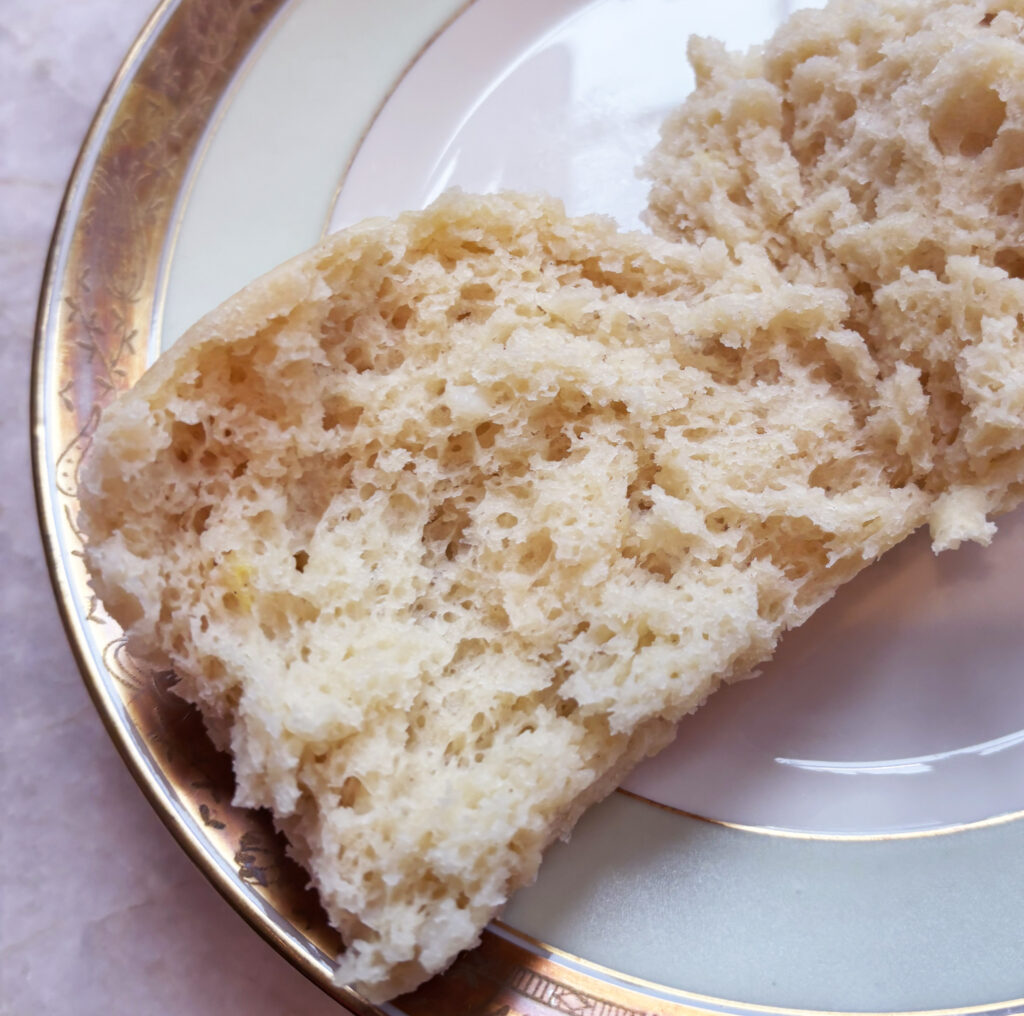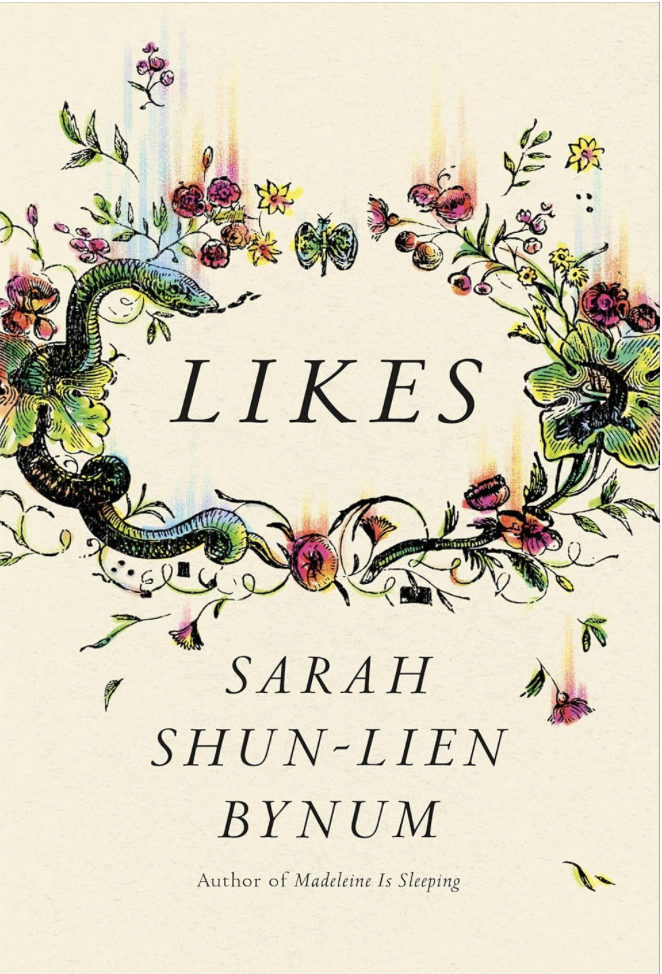
Restingmotion

  • Mixed Feelings

    I believe I mentioned two cookbook clubs, but I only wrote about one. Let us continue.

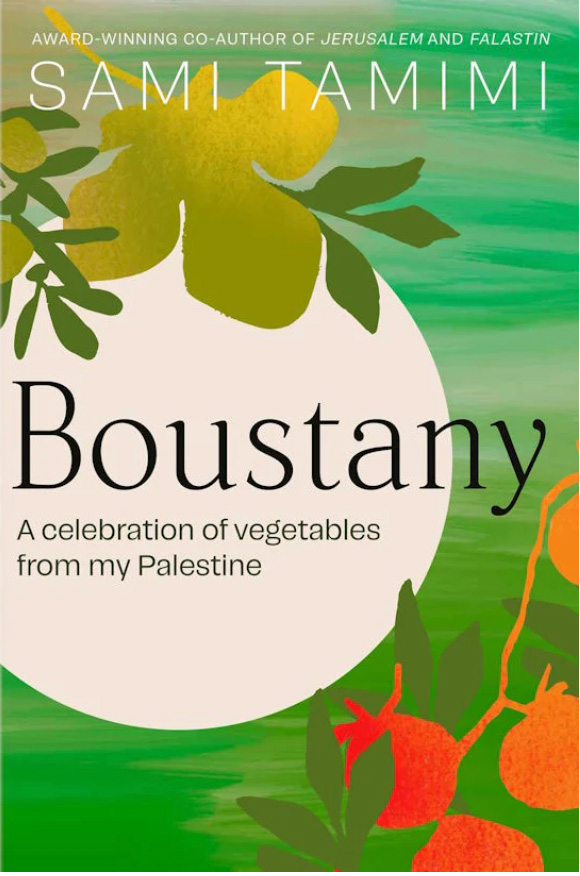
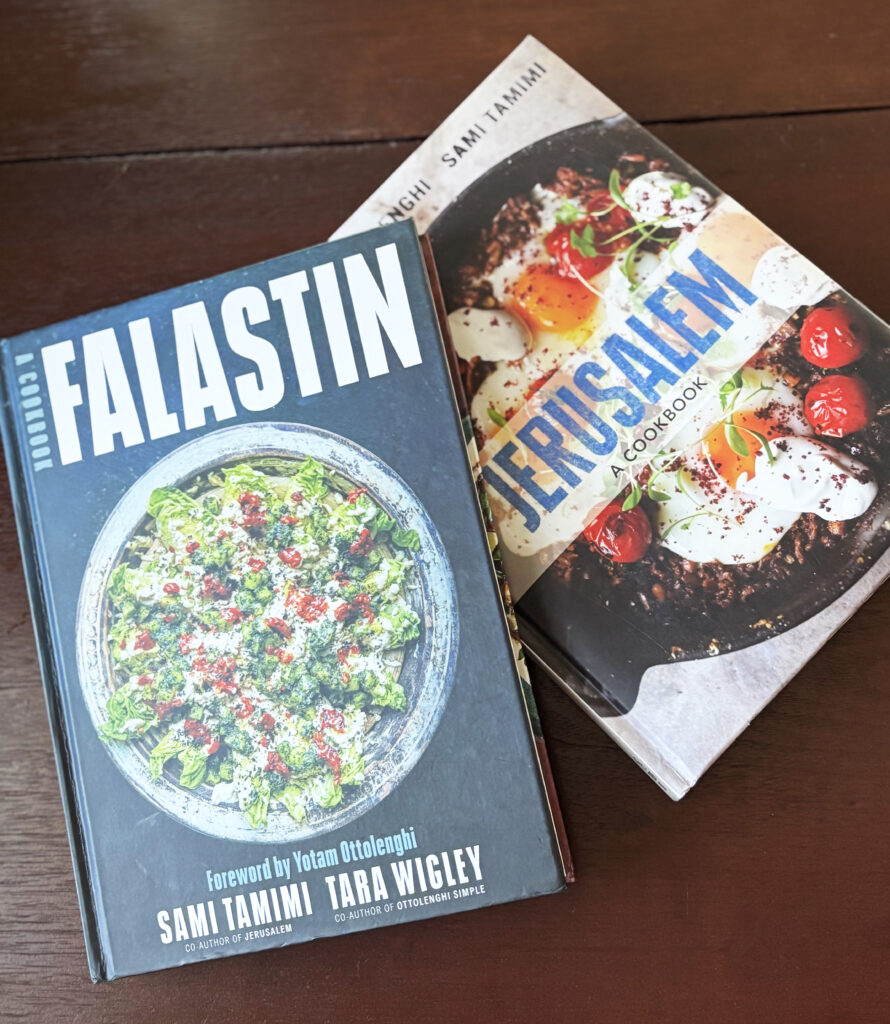
    In September the book for the “Cookbooks of Interest” club was Boustany by Sami Tamimi. I own Tamimi’s two previous books, Jerusalem, written with Yotam Ottolenghi, and Falastin. Both are favorites and many recipes from these books make frequent appearances in my kitchen. I was, therefore, very excited about the release of this new book.

    Yet upon my initial perusal, I found this book to be less appealing than the two previous books. Hence “mixed feelings” as the title of this post. Many of the recipes appear to be tweaks, or minor variations, on other recipes, meant to satisfy the vegetable forward focus of this book, but not necessarily compelling on their own. But that admittedly is my own perspective formed after a long life of cooking. Not every book can appeal to every cook.

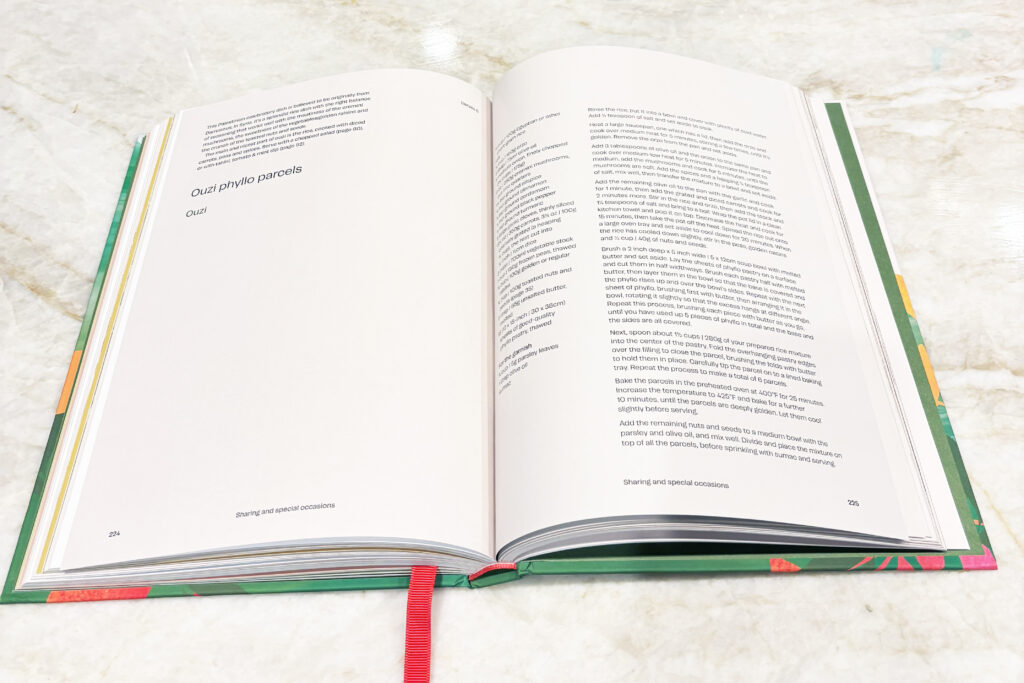
    There is also a design issue I find annoying. Several of the recipes appear on the page in a format much like the one above. I understand that the goal is to have all the ingredients and instructions on one page. But apparently this means that for some recipes the title and head notes do not fit on the same page. Yet I find the layout above visually disturbing, distracting enough that it detracts from my enjoyment of the book. I admit that sounds shallow, and I don’t like the idea of being shallow. And yet here I am.

    The recipes I have tested however have all been excellent. And that fact is softening my objections to the book.

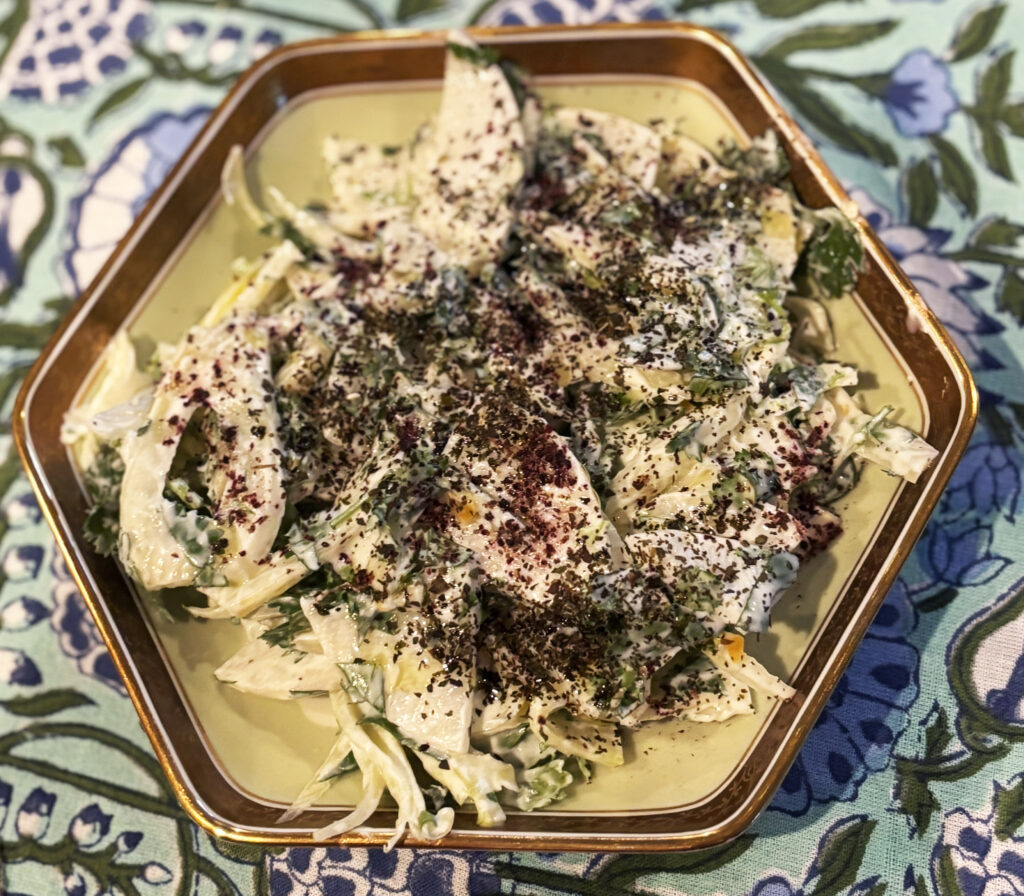
    This was the Fennel, Kohlrabi, and Cilantro salad. I love the way the sweet, anise, crispness of the fennel plays with the soft juicy bite of the kohlrabi with its earthy, cabbage/turnip vibes.

    I did not make the dressing exactly as written. Despite my conviction to the contrary, I did not have an orange, and I was too tired to go out just to get one, so there was no orange zest. I did have lemons and limes but although they would have been delicious, I was not convinced they would provide the note I wanted. Instead I used some candied grapefruit peel that I had made after infusing some gin with grapefruit last spring. I am sure the flavor profile was not the same as the one Tamimi intended, but it added a very nice note and provided that depth of citrus layering that I was seeking. That dressing, by the way, is fabulous and I would use it with many other dishes.

    The salad and dressing played very nicely together with a subtle layering of flavor that I had not anticipated. Not surprisingly, using two types of mint, dried and fresh, added complexity. I did think my salad needed a bright pop of acidity so I sprinkled sumac on top, which was not in the recipe. This simply could have been my tastebuds, the use of candied grapefruit peel instead of fresh orange zest, or simply the differences in flavor between individual vegetables.

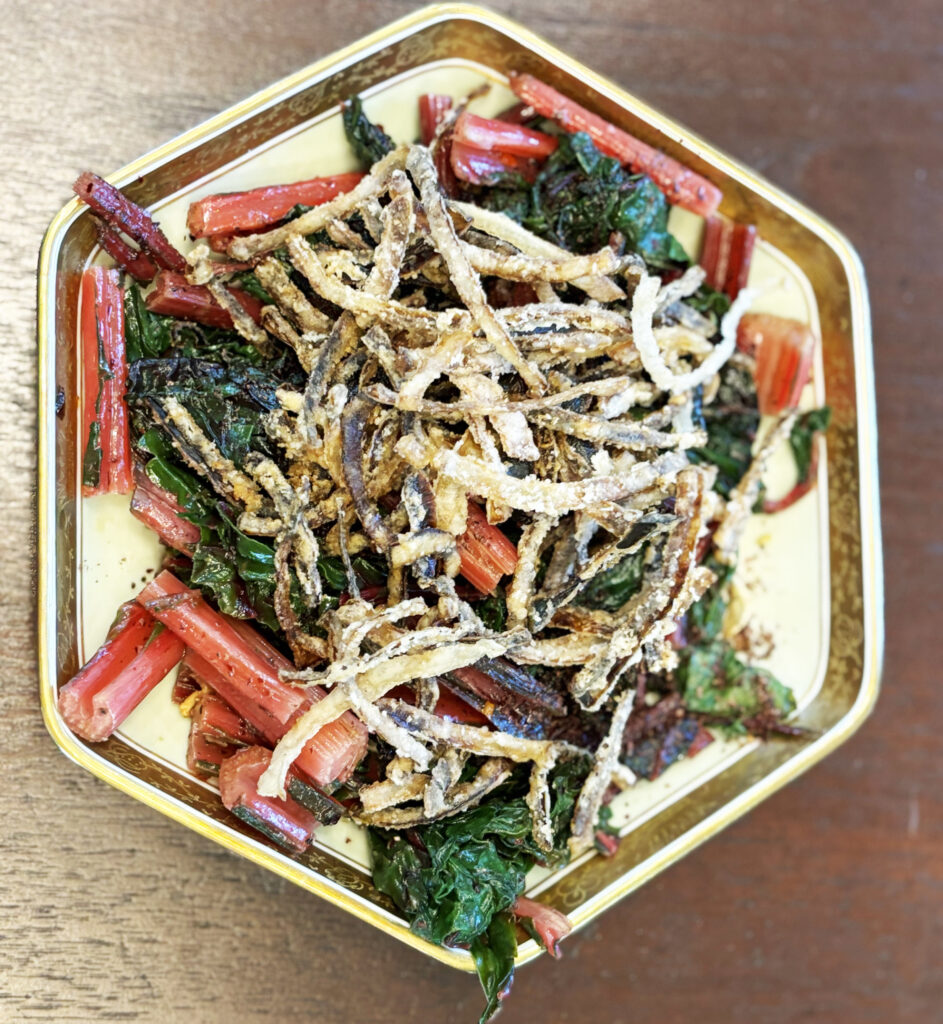
    Next Up was braised chard with crispy onions and sumac. The idea of adding sumac to chard, one of my favorite vegetables, was very appealing. And I admittedly liked the idea of the crispy onions as well. Otherwise there is nothing new here in terms of technique. The chard is parboiled, drained, then sautéed the with aromatics; pretty much my standard method. Tamimi tells you how to make crisp fried onions, but frankly I think the kind that you buy at the grocery store would work just as well. If I could find gluten-free crispy fried onions, I would have not have fried my own. I learned that sumac and chard go very well together, and that crispy fried onions are good on top of sautéed greens. I don’t really need a recipe for this, but I never would have thought of it on my own. .

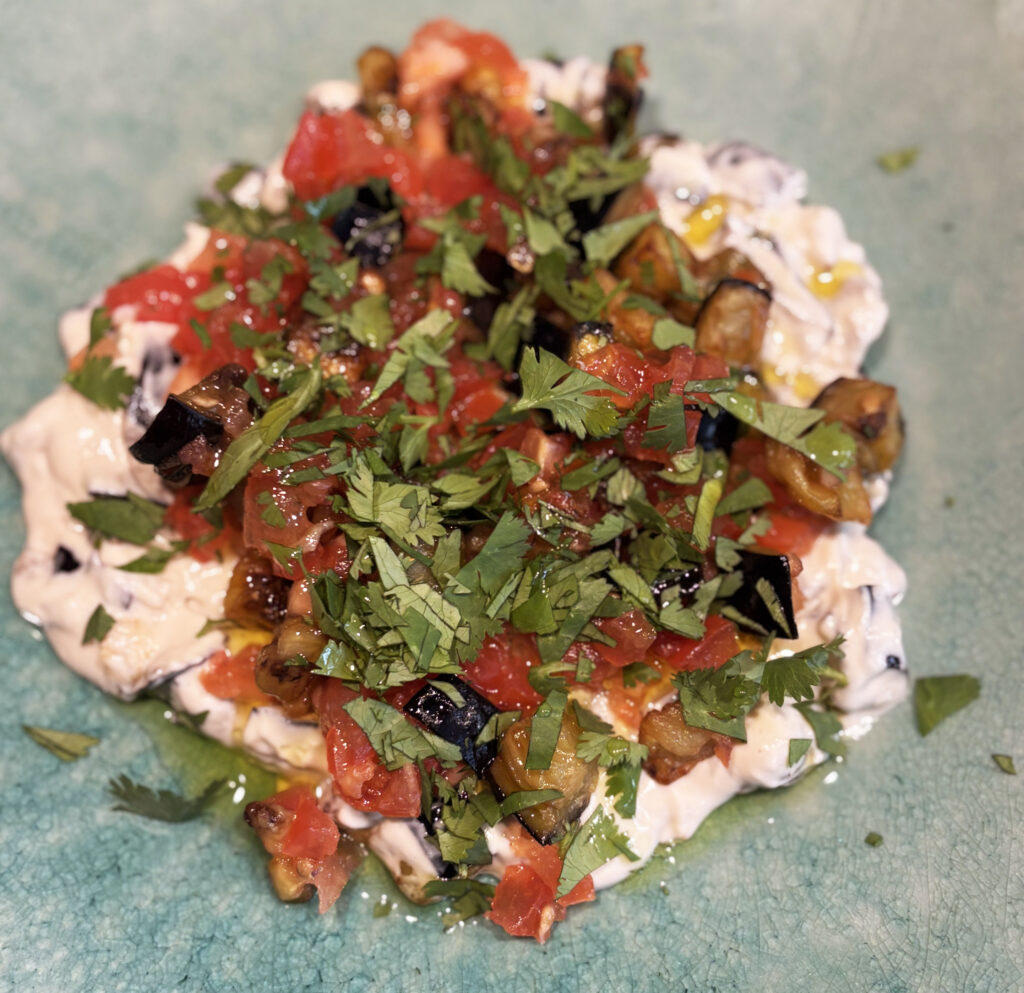
    The high point of the book, so far, is the dish above: eggplant m’tabbal with tomato and cilantro salsa. This is a dish I would drive out of my way to have at a restaurant and I will definitely make it again. It is also a dish I will not make frequently just because of the time involved in salting the eggplant and then frying it. It is definitely worth the effort, but a bit indulgent for this solo diner. The salted eggplant does not absorb as much oil as it would if I skipped that step. Most of the eggplant is tossed with a tahini-yogurt sauce, and the remainder goes into the tomato cilantro salad. The result is far more than the sum of its parts. The dish is not difficult, it simply requires planning, and it is richly satisfying and crave-worthy. This dish alone was worth the price of the book.

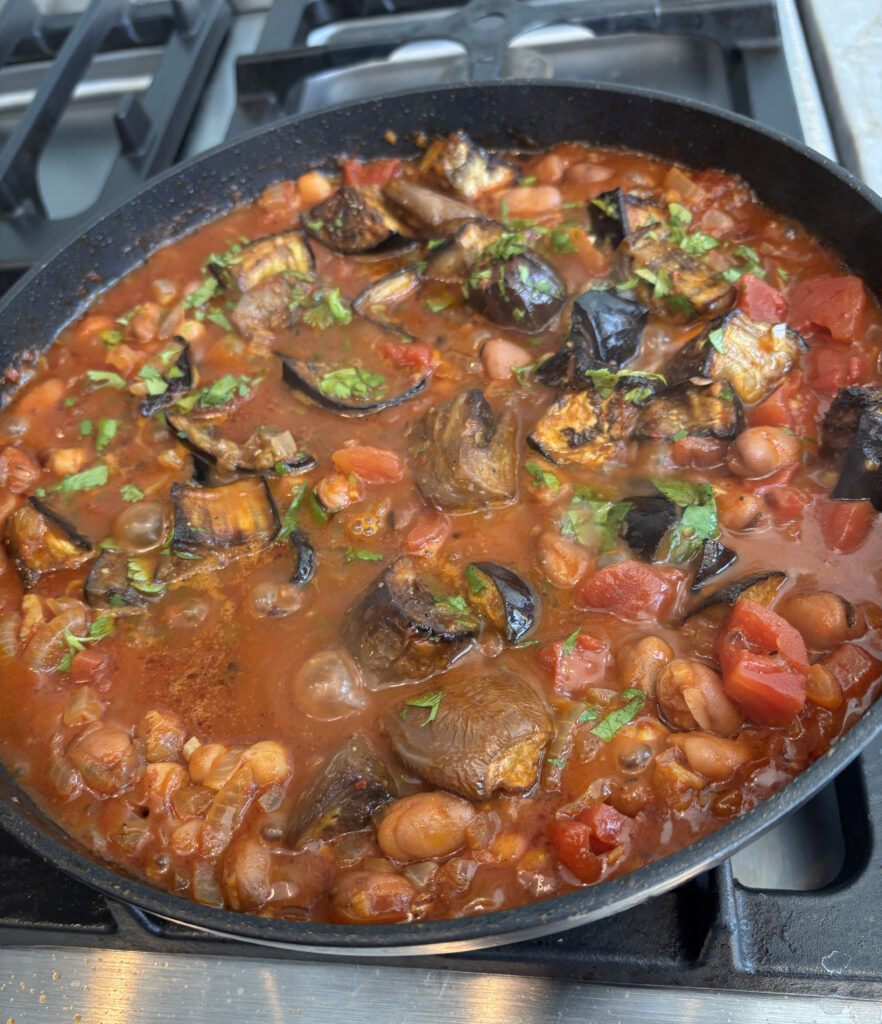
    The final dish I made in September was Eggplant and Fava Beans with Eggs, although in the photo above you only see the fava bean and eggplant stew without the eggs. I made the full recipe, which served four, thinking that the eggplant, bean and tomato mixture would reheat well, and I could use it for multiple meals. This proved to be true, and the dish did indeed mellow and become softer and richer with age. I would keep additional stock available for reheating though as it does become dry.

    I used canned fava beans. which is what the recipe called for. although I considered cooking a batch of fava beans from dried. In future I think I would prefer to start with dried, even though it adds extra work and time to the dish. I find the fava beans that are cooked from dried have a silkier texture than canned favas. And really it is not that much work to cook a pot of beans and use them for multiple dishes, or even freeze the extra to have on hand for last minute inspirations.

    Overall, this dish was very good. I felt it needed a creamy touch, so I added a bit of sheep’s milk feta with my beans and eggs. It may not need the creaminess of the cheese with home-cooked favas, but then, cheese is always a nice touch.

    Based on these dishes, the book was a success and one that has earned a place on my shelves, if only for the eggplant m’tabbal. There are many things I want to cook, and including quite a few new ideas and explorations. The recipes themselves are winning my favor over, despite those design glitches. I hate to admit it, but I may never make those recipes, the ones on the pages that annoy me, simply due to my own grumpiness. But thee is a lot more in this book to explore.

  • Welcome Me Home with Flowers

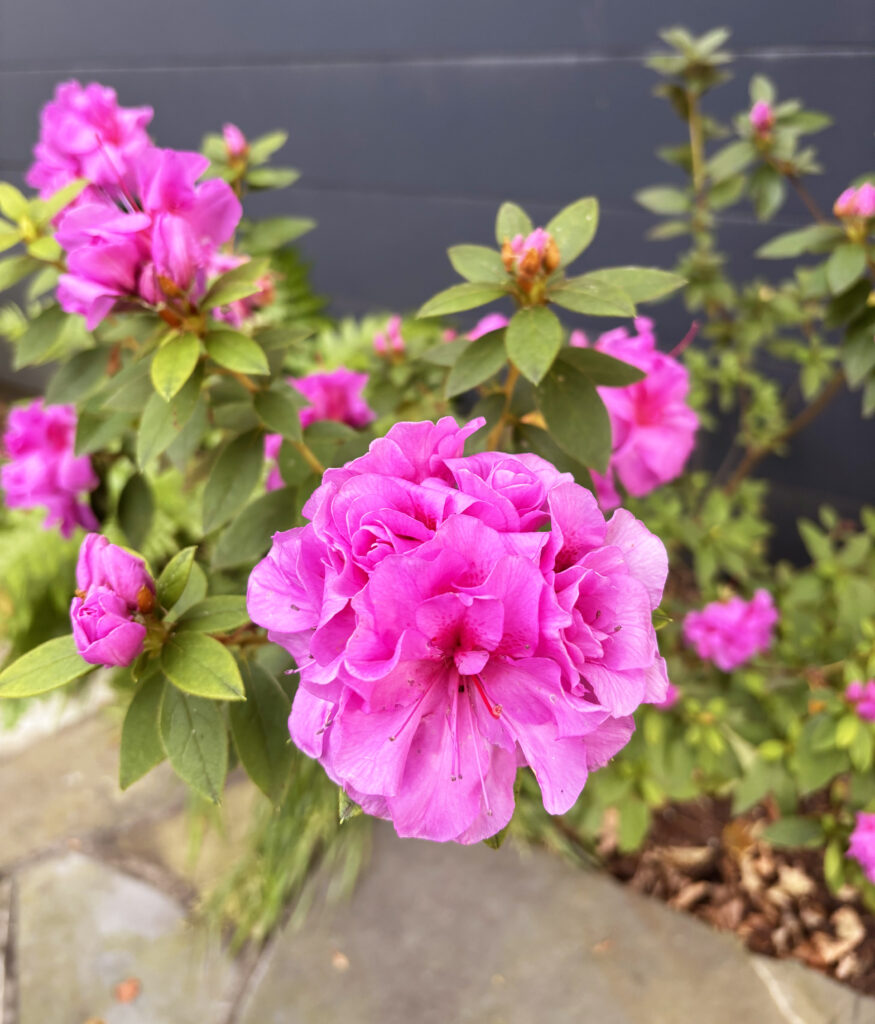
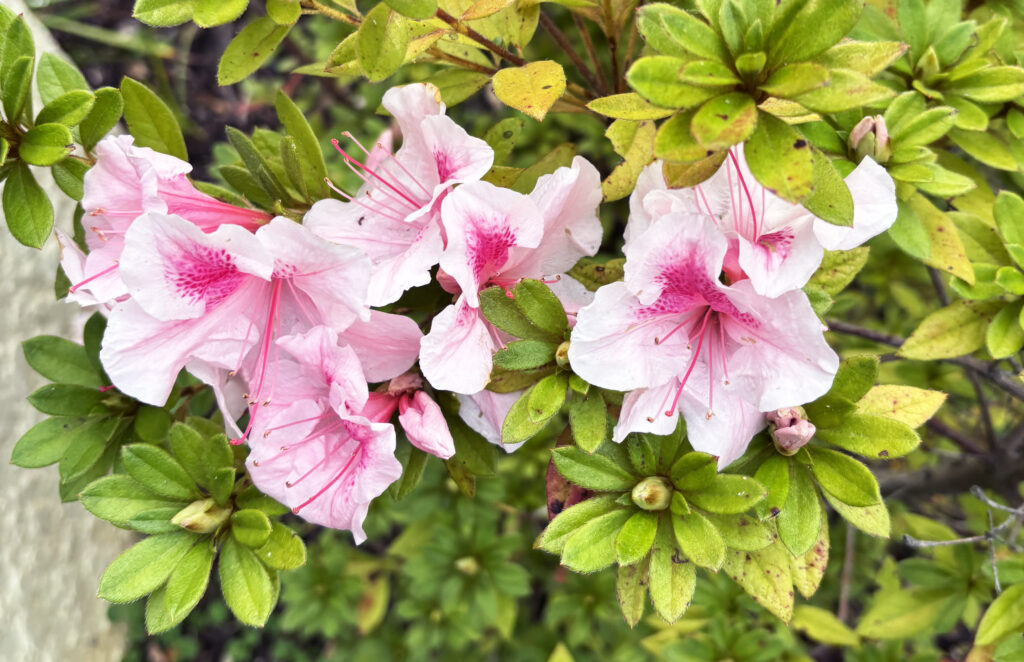
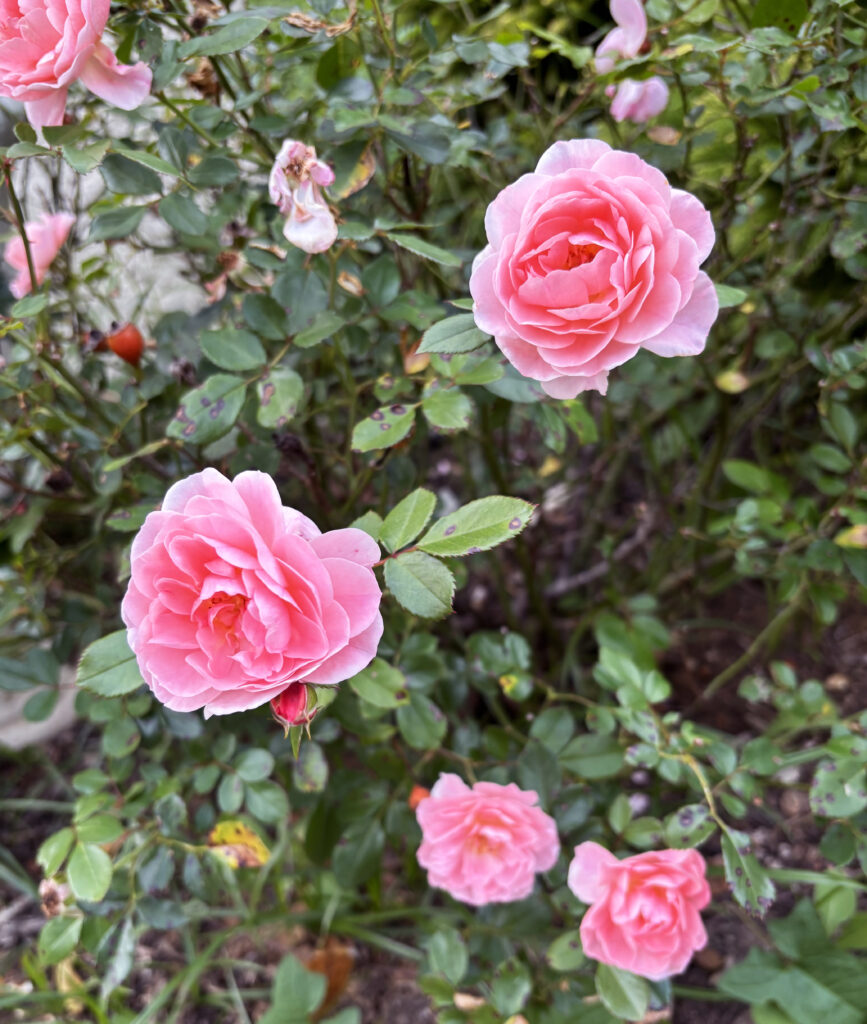
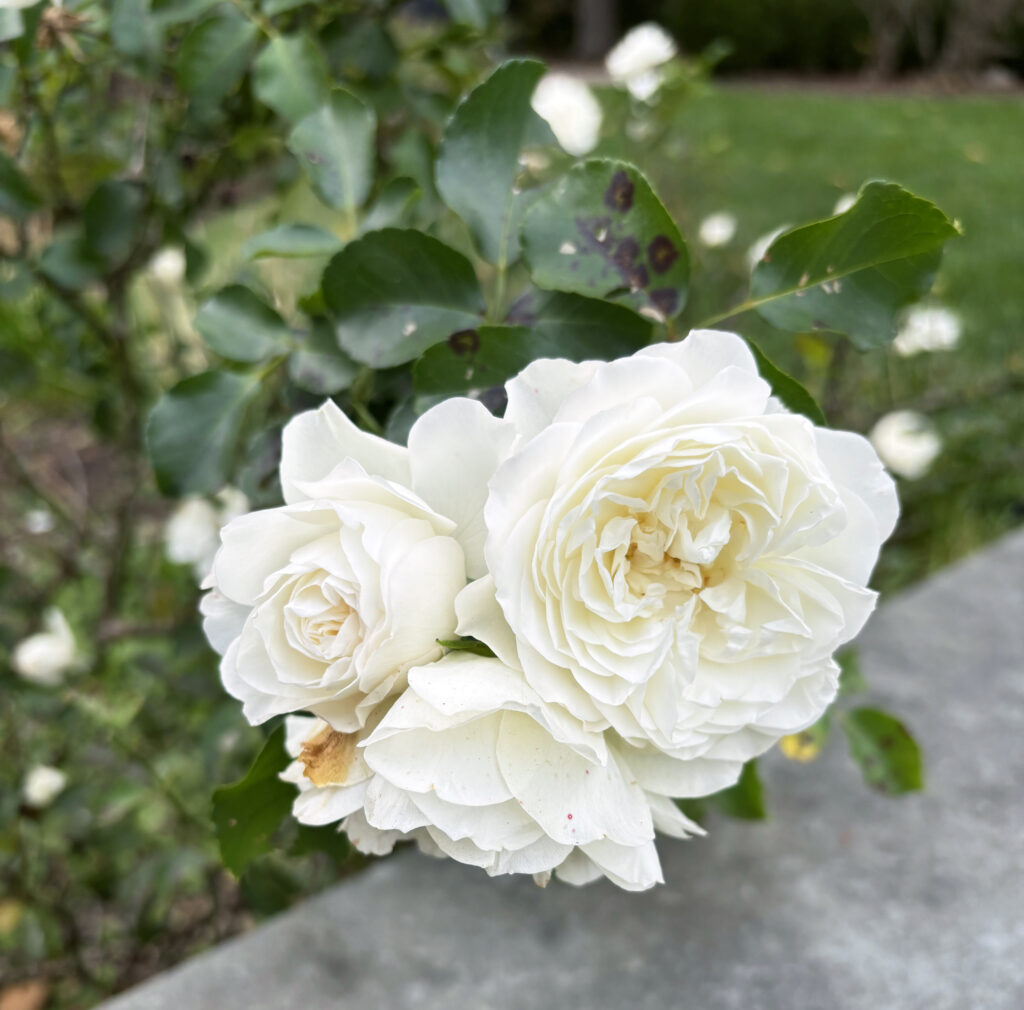
    I returned home from a trip to Texas to find my yard abloom with flowers.

    It is not the biggest fall display ever, but rain and cooler temperatures have performed their magic. And at this point I am grateful for every blossom. I neglected the garden this year due to back issues and the fact that anything survived to bloom makes me very happy.

    These photos were all taken in the late afternoon, when the sky was also overcast.

    Every single blossom felt like a welcome home party.

    I am inspired to get back to work. Well I was so inspired before I left but the extra encouragement doesn’t hurt.

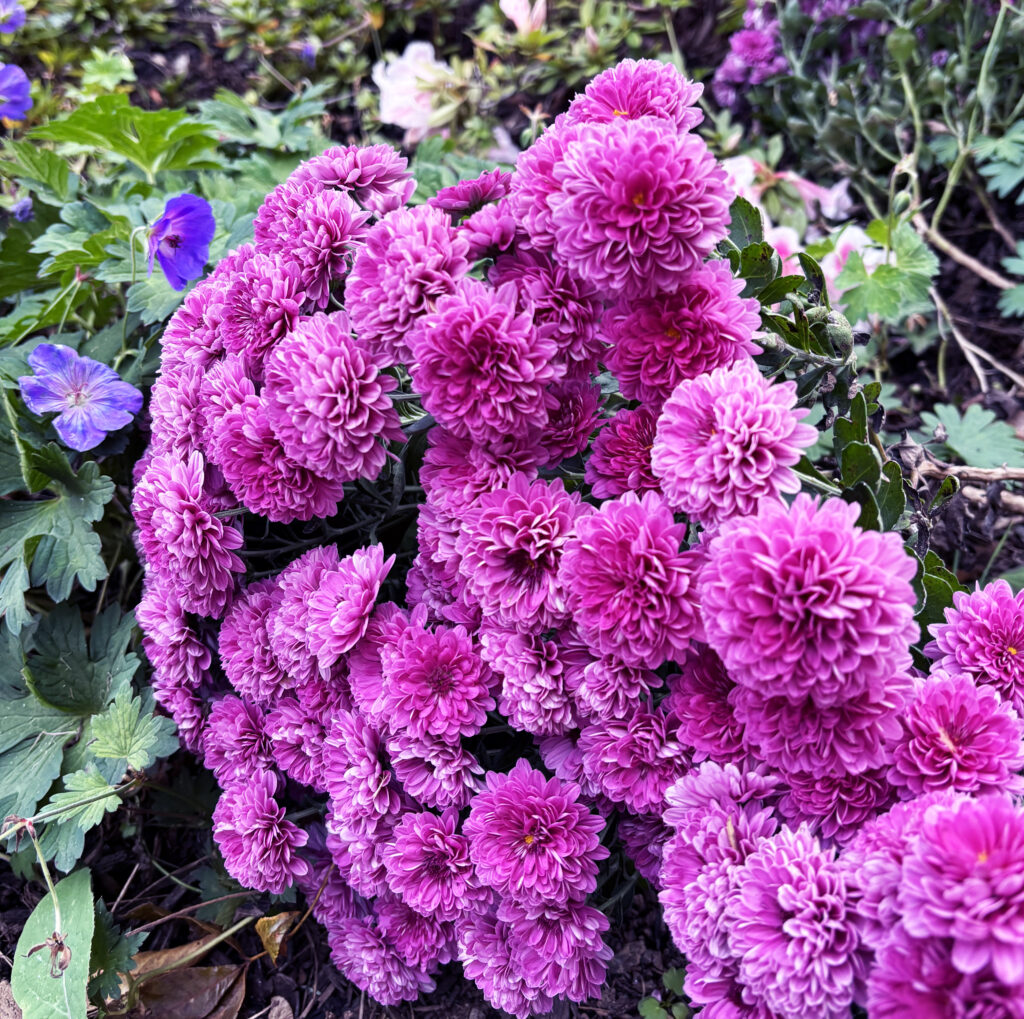
    These mums were an accident. I didn’t plant them, but I’ve happily left them in place, surrounded by cranesbill geraniums and azaleas.

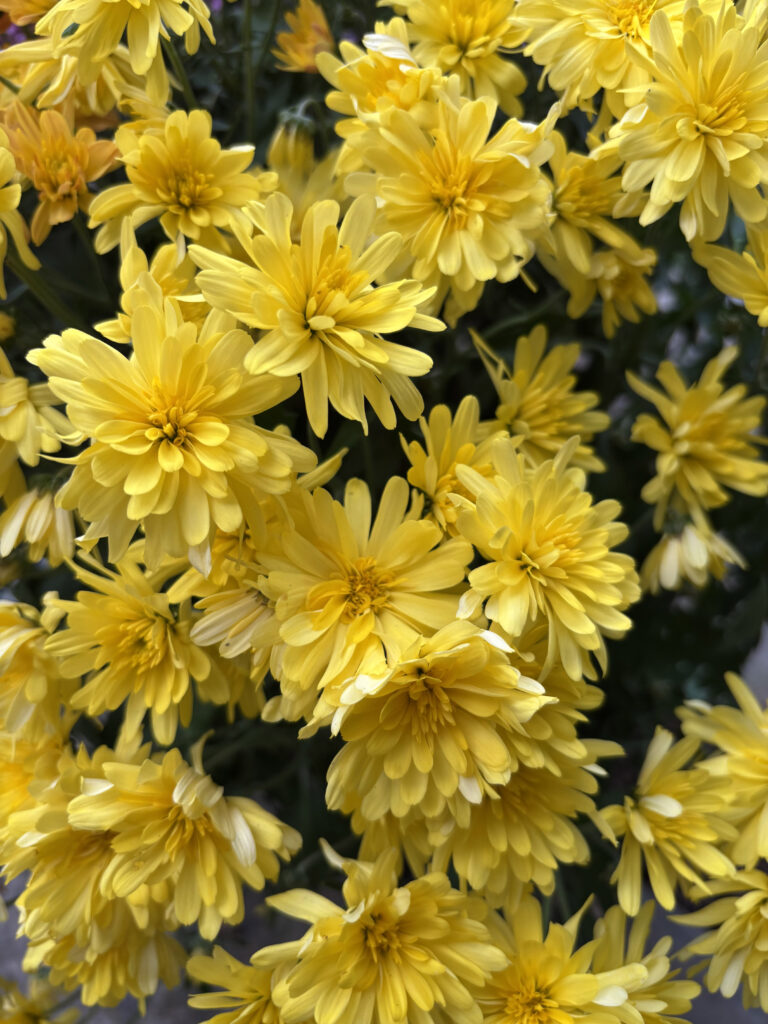
    I don’t have many yellows. These yellow mums are in a pot but they remind me to bring more yellow into the garden. The yellow coreopsis, “summer sunshine” which usually blooms for me in late September and October, only has scattered blooms this year, primarily because it needs to be divided. Of course, that process will spread their cheerful yellow joy across the yard.

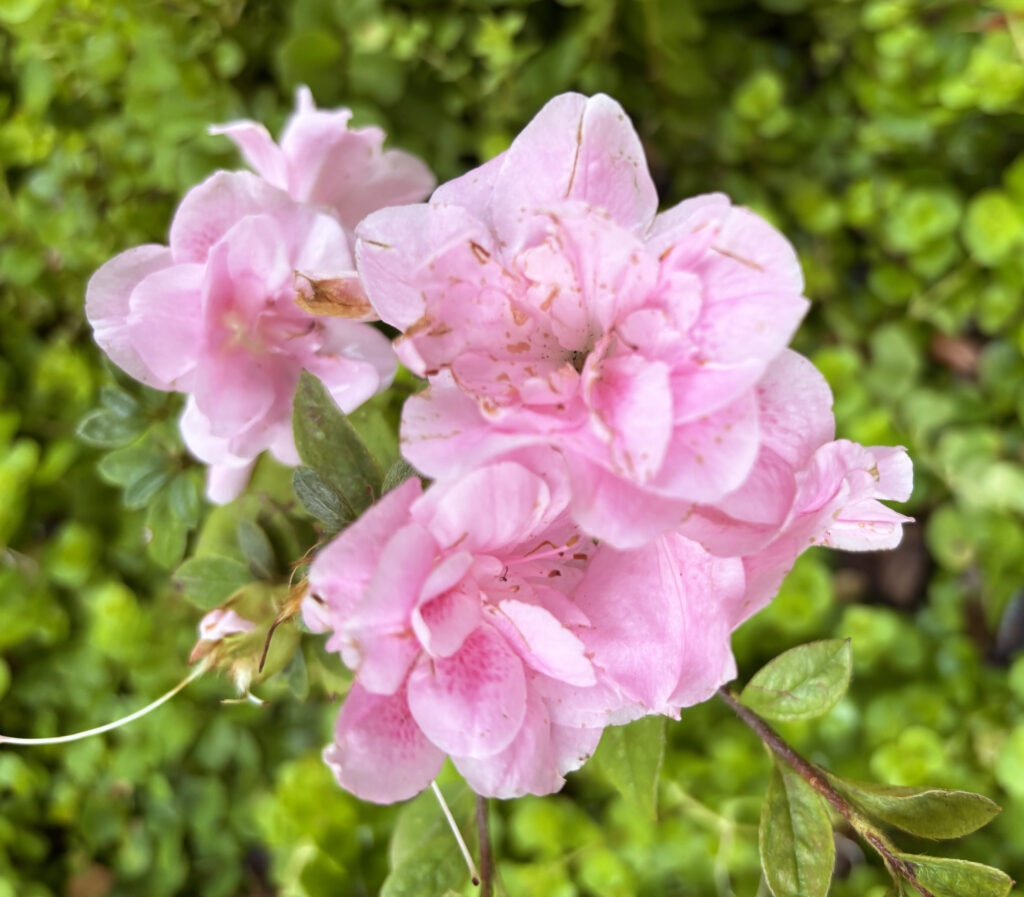
    And this azalea, which is has been in place three years, but struggled at first, is blooming for the first time.

    Every year is a surprise.

  • Homeward Bound

    Apologies for not writing.

    I’ve been in Texas visiting my mom. Apparently I am not yet in full blogging mode as I still forget to take pictures of interesting things. Not that much has been interesting, aside from the happy (to me at least) arrival of autumnal weather.

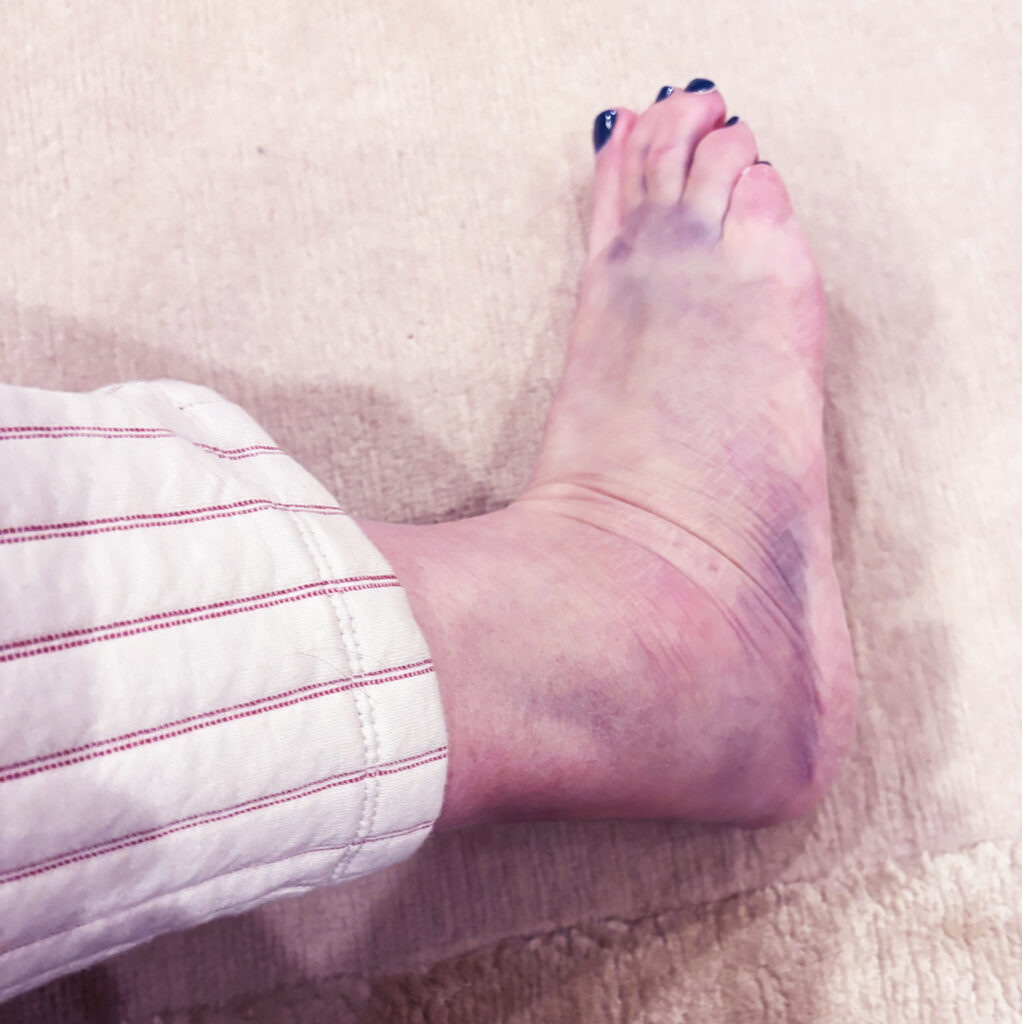
    I did something stupid the day I left Knoxville. I took Garbo for an early morning trip across the street, which is level and safe so I did not take a flashlight. But she wanted to head up the street at the end of my driveway, which is steep and has some sharp drops at the curb. Stupidly I let her, and tumbled off a curb. For a moment I thought I wasn’t going anywhere, but when I did get myself up I found that although I had obviously twisted an ankle, I could walk on it. Back at the house, I saw no obvious break. I did a squeeze test for a high ankle of fibula fracture, and palpated my ankle bone and common injury sites (Ottawa Rules) but the pain I had was elsewhere. That doesn’t mean I didn’t have a problem. But weight bearing was not an issue so I decided I probably didn’t need an x-ra at that time. Besides, it would be a couple of hours before a walk-in clinic opened, and I wanted to get as far west as possible before hitting a storm front, so I just packed the car and left, figuring that by driving I was at least not putting weight on my ankle.

    By the time I got to Dallas, the next day, my ankle felt better. I did stay mostly off it for days. Initially I had no pain at the ankle itself, just in my foot, some swelling, no bruising, and little pain on weight bearing. I did have pain on flexion and extension, so I used an ace bandage and hobbled around with crutches and a borrowed knee roller for a few days.

    I did start to have pain at my ankle bone late Wednesday, five days after the fall, but not on weight bearing. Mostly at night when my foot was not in neutral position, and yesterday driving. I think I should stop at the orthopedic walk-in clinic when I get back to Knoxville today. Despite my lack of pain, a small fracture is not out of the question. I have also developed bruising across the base of my toes, but I don’t really have pain there.

    We will see if I have been terribly foolish, or just mildly so, later today. I’m actually surprised I am admitting to this.

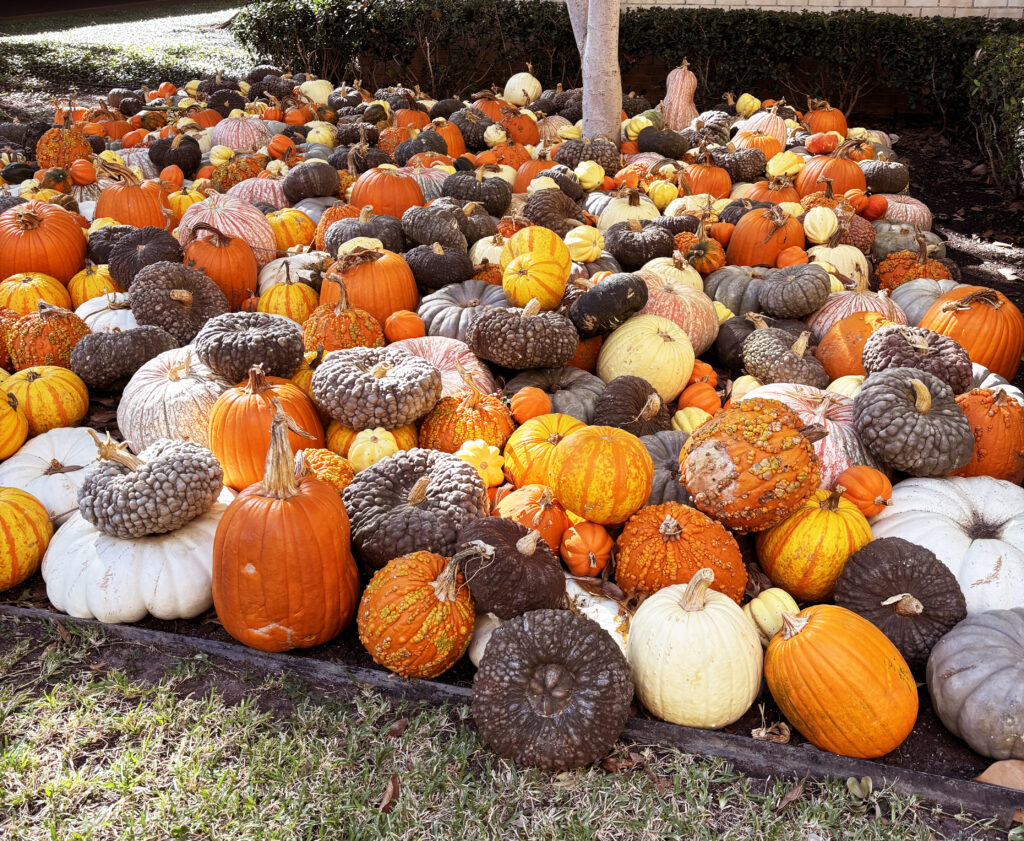
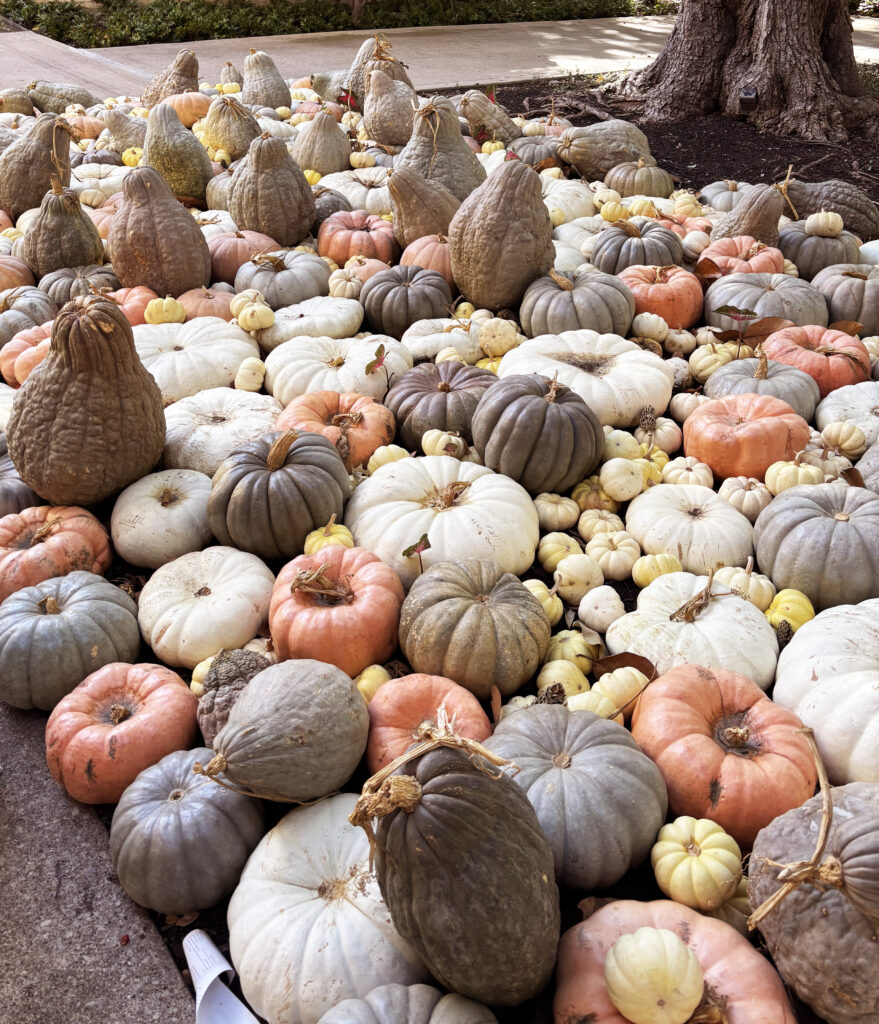
    The pumpkin photos are from a mall in Dallas. The weather was delightfully cool in the mornings and evenings, warm and breezy during the day. As I head east the weather is becoming cooler and I needed a sweatshirt this morning when Garbo and I were out.

    I have delayed my departure until just post sunrise. I decided I would rather face the early morning glare on the relatively empty interstate than in Nashville traffic.

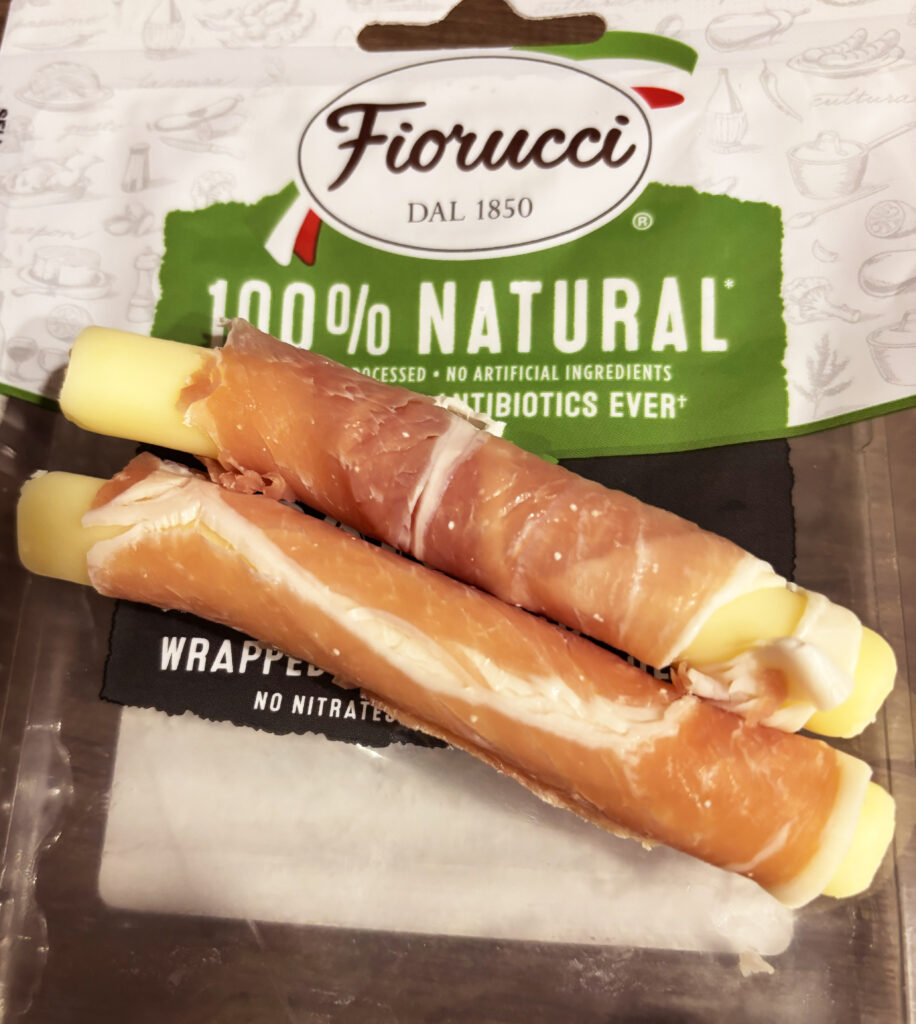
    The breakfast at this hotel is awful though. The only eggs are overcooked, tough as leather and just as dry. The coffee is not bad. I’m glad I picked up these little prosciutto rolls as a travel option in case I couldn’t find anything healthy on the road. I’ve opted for charcuterie in the room for breakfast. But I am ready to be home, in my own kitchen. Garbo is ready as well.

  • Good Dog

    Yesterday evening I came home from knitting to a little surprise.

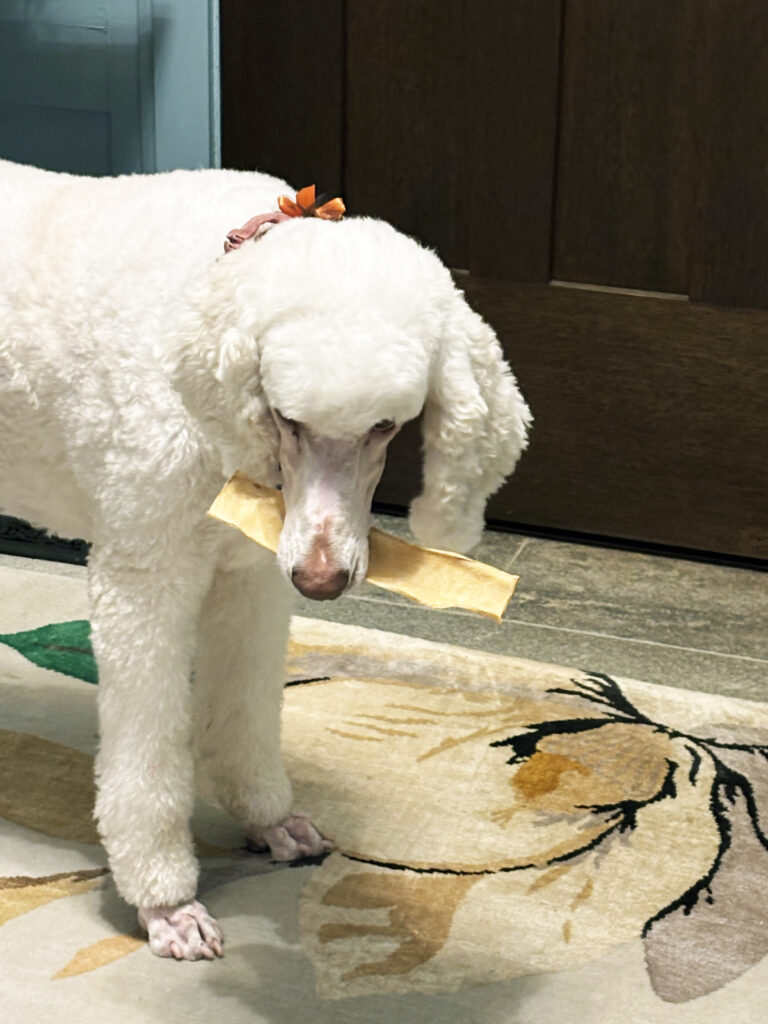
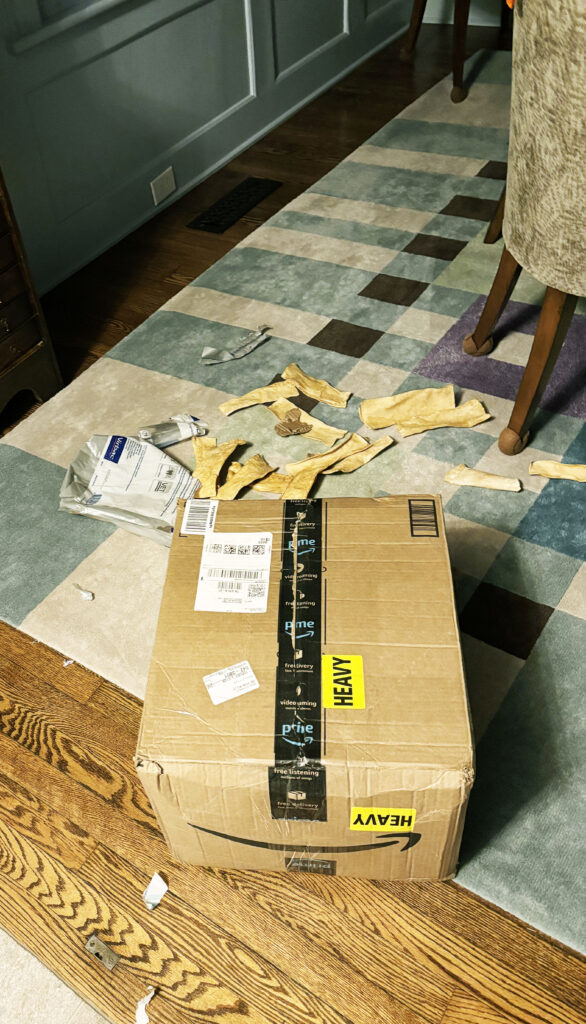
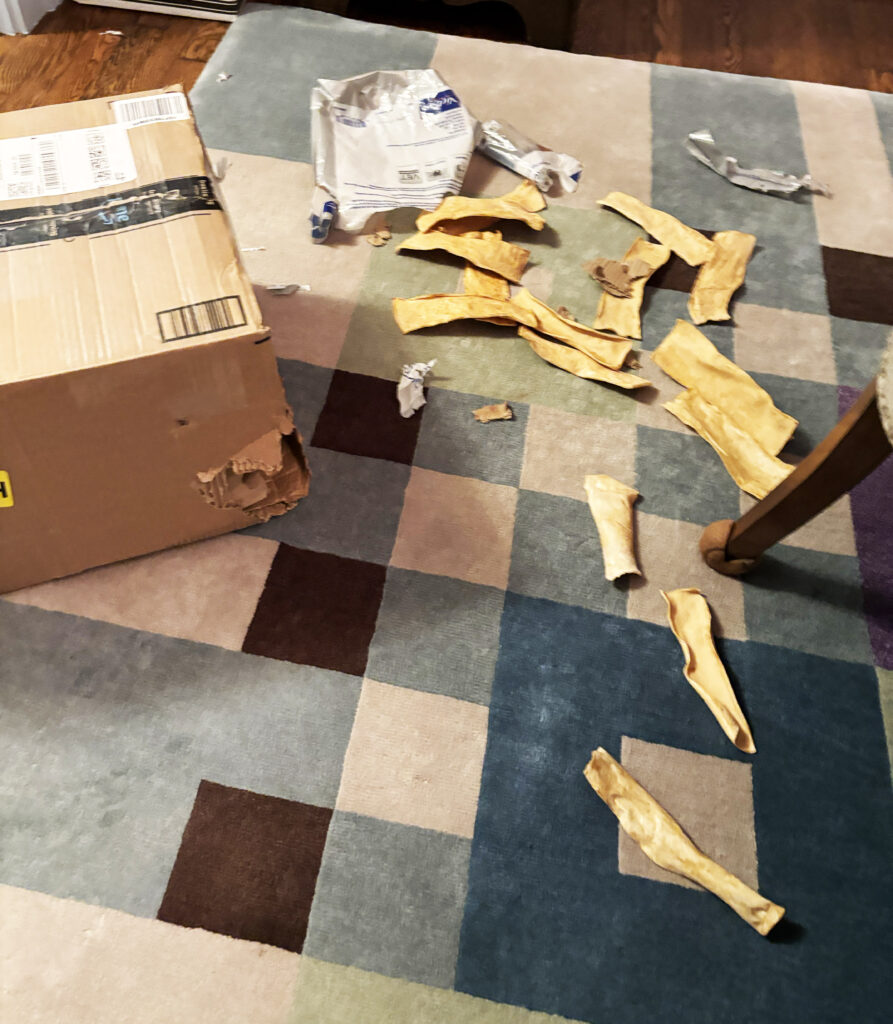
    There were little bits of foil and cardboard scattered around the entry hall, along with a somewhat guilty looking dog with a dental treat in her mouth.

    At first I couldn’t figure out what had happened. I went to where the treats are usually kept, on a high shelf in the kitchen where Garbo has never ventured previously. But their storage container was intact.

    But then I turned on the lights and discovered that there was a package on the floor at the entrance to the dining room. The cleaning ladies must have brought it in before they left.

    Obviously it had once contained a bag of doggie dental chews, among other things.

    I could only laugh.

    Garbo knew those treats were in that box, and she, in very doggy fashion, figured out exactly where they were and how to get at them. Such a good dog! Meaning she was behaving exactly as any dog who smelled a treat would behave, how I would probably behave were I to find myself in the same circumstances.

    Garbo knows not to grab food off counters (although she has been known to “forget”) but she also knows that if something is on the floor it is fair game. I never leave food, food containers, or food wraps, in open trash containers around the house.

    The box was on the floor. Therefore it was fair game. I’m still laughing.

  • A Little Update

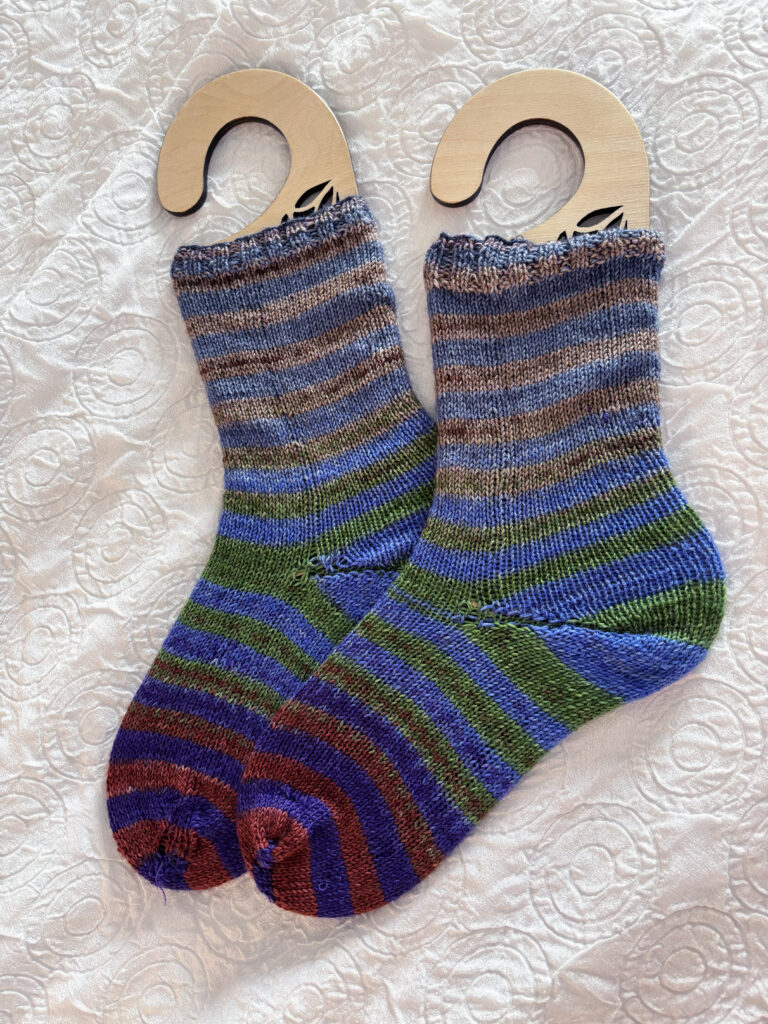
    I finished knitting a pair of socks while I was at sewing camp.

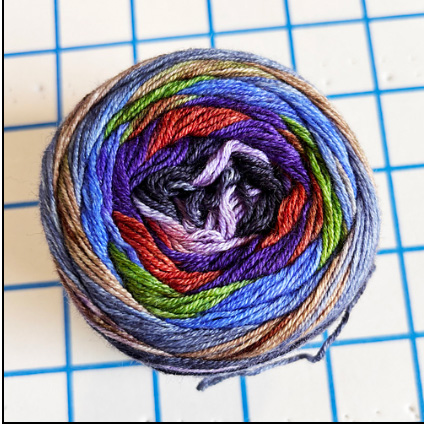
    These are the basic, simple, no pattern socks I usually make with self-striping yarn. I am calling them my Lillian socks because I started the first sock while I was sitting with my aunt Lillian during her final days. The yarn is Urth Uneek Sock in color number 53. There is actually enough yarn in the skeins to make knee-high socks, but I don’t really wear knee high socks all that much at the moment, so the extra yarn will eventually be used in another project.

    I finished that first sock shortly after returning to Knoxville, after which I was distracted from knitting for a bit. I actually hoped to finish the second sock prior to leaving for Nashville, but no. At least I thought to pack my sock blockers, so I could block them immediately, in the hotel. Good job Mardel!

    Sock weather has not quite arrived, but I am ready and these socks are full of memory and meaning, both of my Aunt and of getting through a particularly stressful period in my life. Triumph socks.

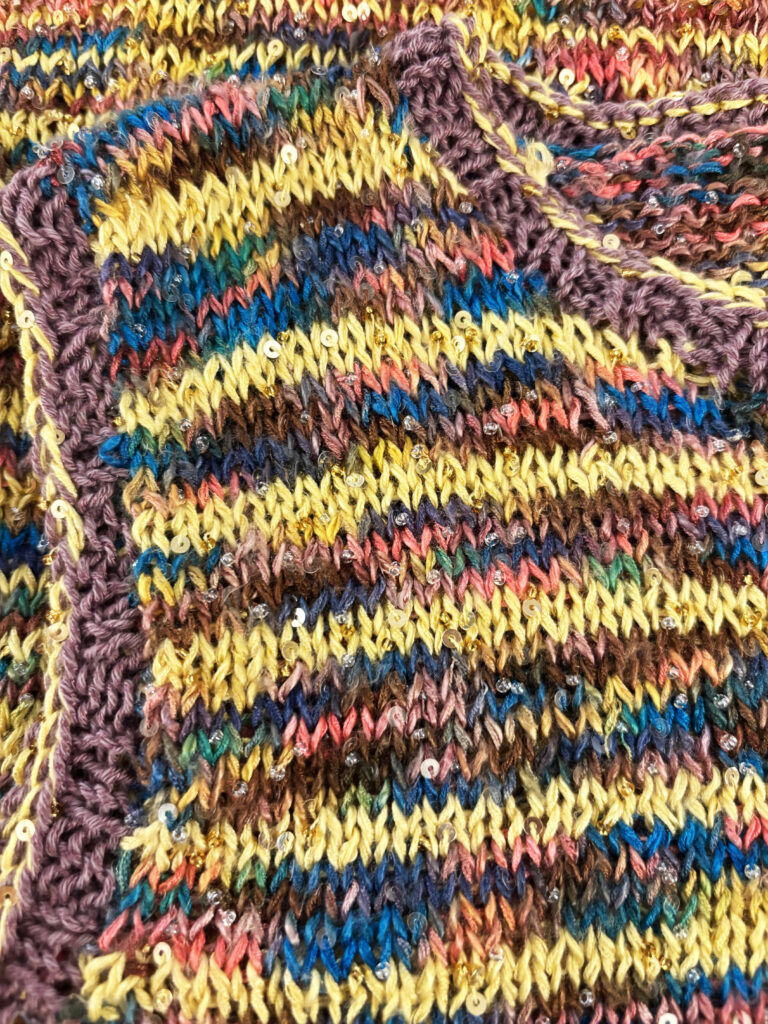
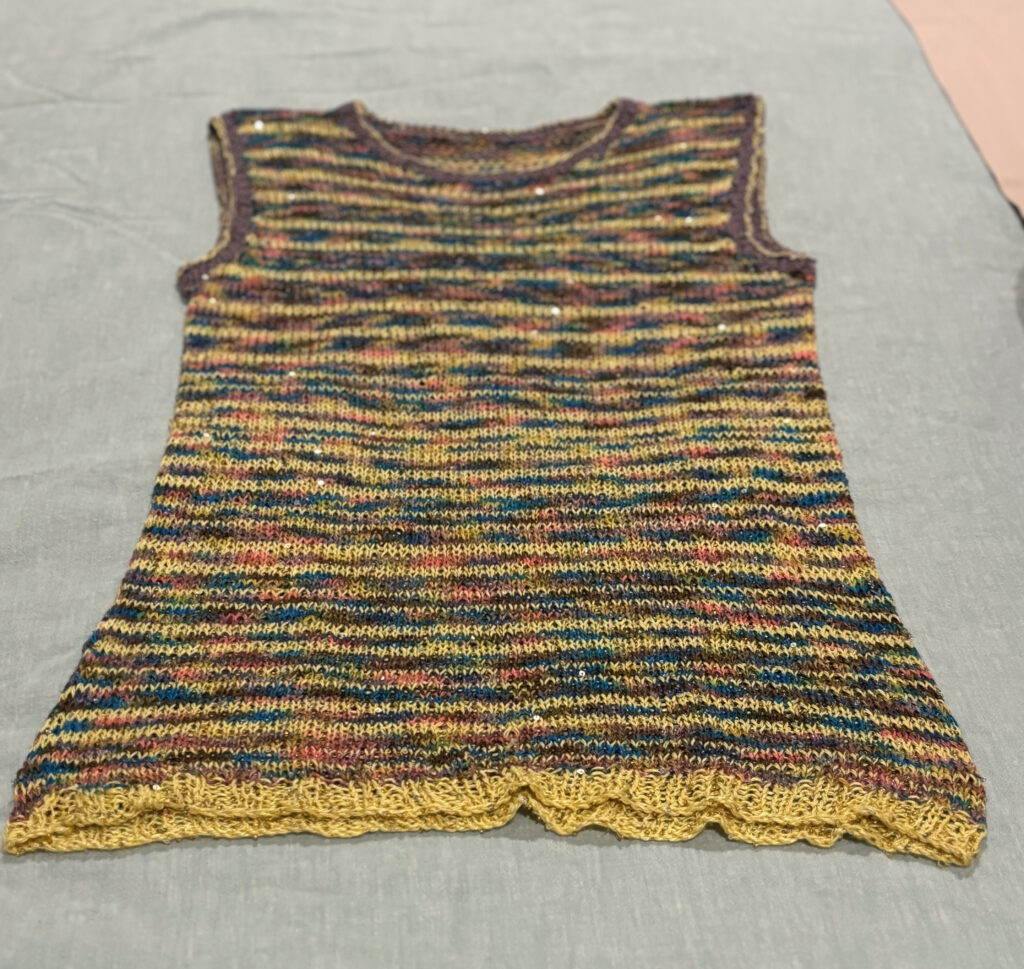
    While I was in San Antonio I also finished another project, my Cloud Cover Tank. This is a silk tank knitted in two colors of Artyarns Beaded Silk and Sequins Light using a pattern called “Striped Illusion Tank or Tee” by Iris Schreier. The colors are sequoia yellow and cloud cover. The latter is the multi-color yarn, and the yellow yarn was purchased specifically to go with it. I don’t normally wear a lot of yellow, yet I struggled to find a yarn I liked with the colors in cloud cover. This worked. The whole thing has ended up being a little more autumnal in its vibe than I imagined initially, but I am happy with the results.

    The neckline and armscyes were supposed to be finished in the yellow, and I did indeed finish one armscye before realizing two things:

    • I did not like the appearance of the finished band.
    • I did not think I would have enough yarn.

    I lengthened this top considerably from the pattern, which used more yarn, and I knitted the bottom ribbing in yellow before considering whether or not I had enough yarn so I hoped to find a yarn that would solve my problem without making me rip and reknit the hem. I took myself to a yarn store in San Antonio where I found a skein of Bamboo pop in this nice brown that seemed to work well with the colors of the sweater. On a whim, although none of this was really planned, I finished the bands with a row of the yellow sequined silk.

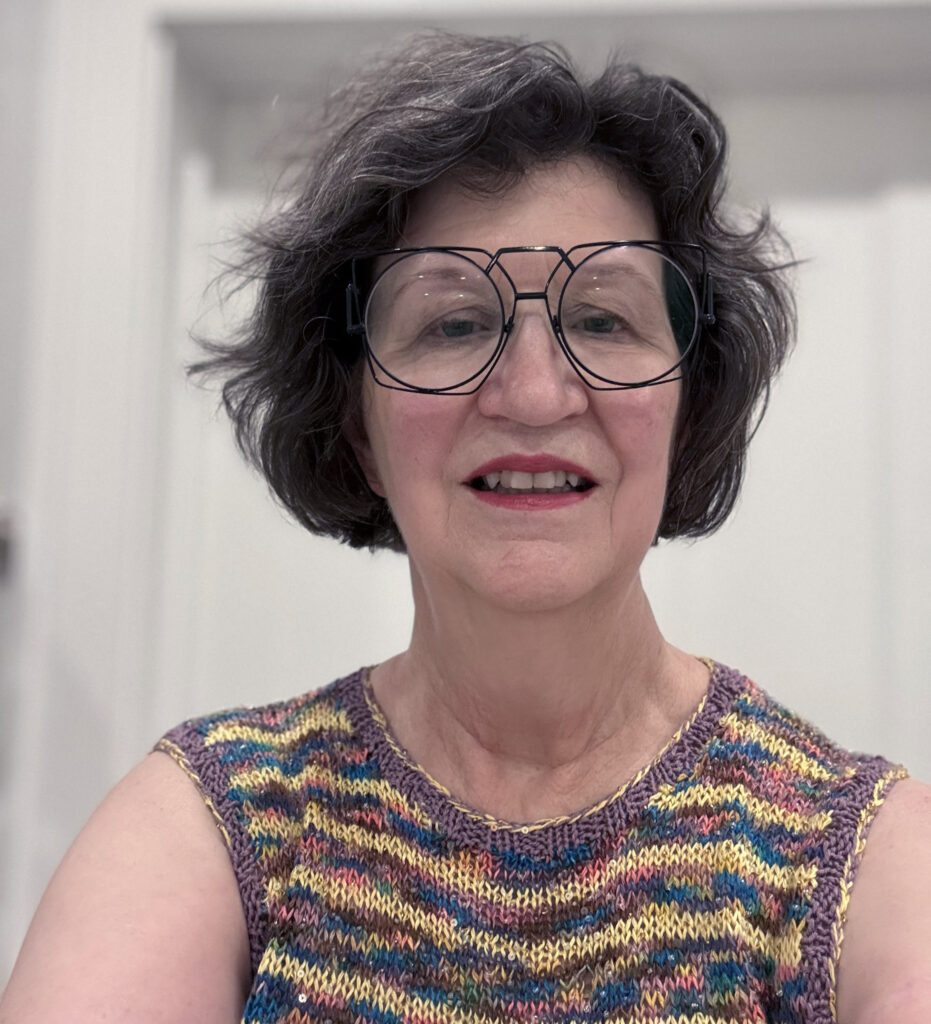
    I love this sweater, although I haven’t really worn it as part of an outfit yet, only to take the photo below. I do like the fit, even it is difficult to see that because my arms are reaching forward for the selfie. I suppose this means I really do need to break down and get a selfie stick or tripod.

    In reality, finished objects tend to sit in my closet for a period, making friends with other garments, before I actually get around to wearing them. This tends to be the case with new purchases as well. There are exceptions, but they tend to be rare. The red top I made in July is one such exception as I’ve worn it at least a half dozen times. I can’t really explain the difference, why some things need to wait and marinate and others don’t.

    I suspect it is all just a matter of mood. I tend to think of life as being rather cyclical. I certainly go through cycles of activity or interests, of mood, of wardrobe choices as well. Eventually a switch is flipped and I’m off to explore something else.

  • Yes, No, Maybe

    I belong to two cookbook clubs. They have been fun and helpful because I like to cook and I like to explore new tastes and techniques, but I live alone and often just fall into boring routine. By committing to cook something from a new book I feed a lifelong passion and encourage myself to have fun. I end up eating better as well.

    In September, the Kitchen Arts and Letters cookbook club was cooking from two books.

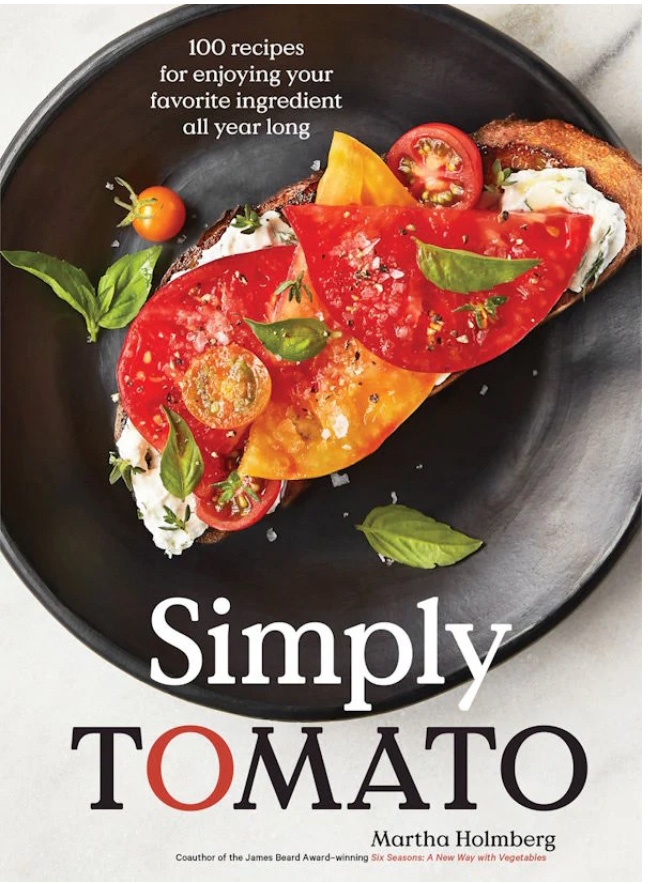
    The first, Simply Tomato, by Martha Holmberg ended the month strong although I was initially a bit wishy-washy about it. Holmberg is a cookbook writer and recipe developer who has worked with Joshua McFadden on his books, and I was familiar with those books. My own mixed feelings arose simply because, on my first perusal, the book looked like it was simply filled with variations on a lot of things I already make and eat. But I was determined to give the book a chance.

    It is true that, for the most part, these are not earth-shatteringly new dishes. There is comfort in that. But Holmberg is also a talented recipe writer and the book is filled with small details about ingredients and technique that elevate each dish without adding loads of complexity to the execution. None of the recipes I tried are difficult. Everything I tried produced excellent results that had me thinking about familiar dishes in new ways.

    So, the big Question, what did I make?

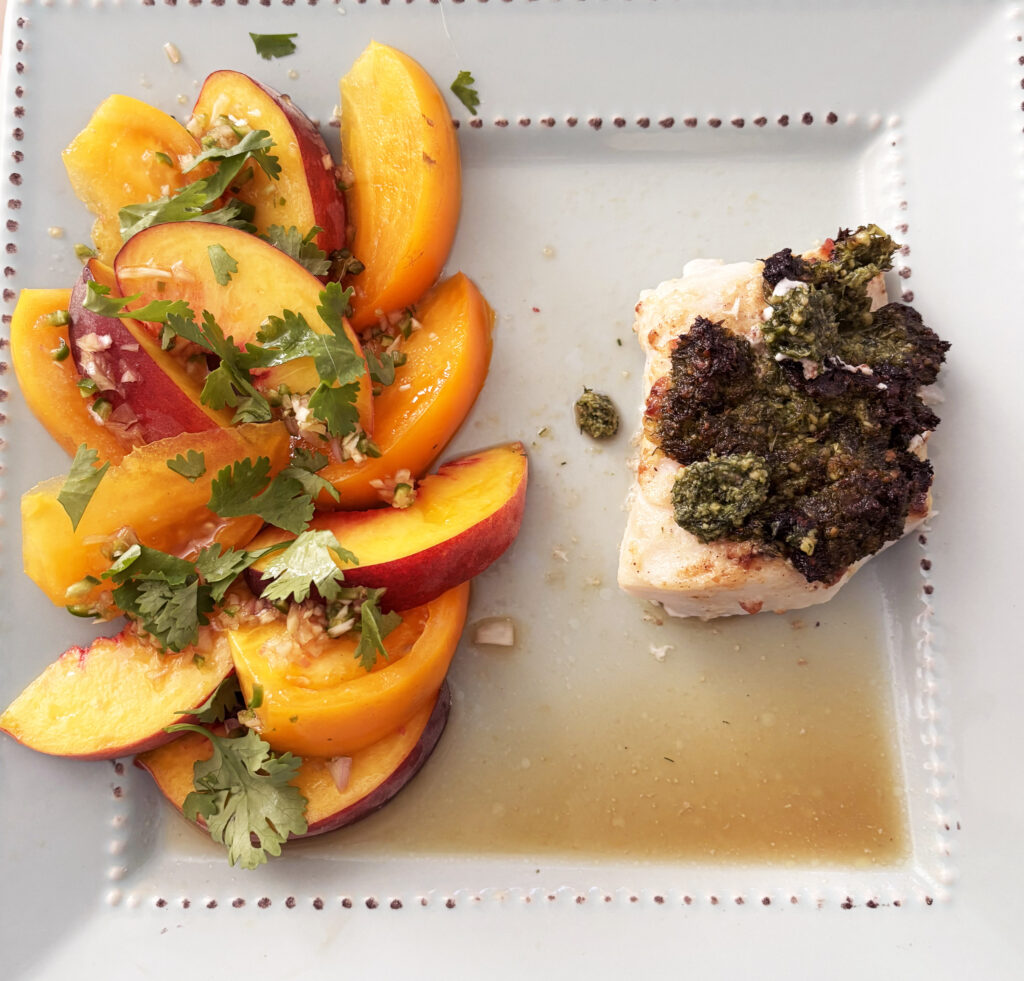
    First up was a peach and tomato salad with a lime and ginger vinaigrette that was inspired by nuoc cham. . This was fabulous and my only complaint was that I used a yellow tomato which was good but not great. I have learned that although yellow tomatoes are good in a mixed salad, I generally prefer red tomatoes. That is just about my taste buds, and just as surely as I’ve said I don’t love yellow tomatoes, I’ll now find the perfect yellow tomato variety that I adore. Anyway peaches and tomatoes play very nicely together, and the vinaigrette adds a serious punch. I would not have imagined that fish sauce and peaches were such good partners.

    I served the salad with a piece of cod that I baked with a topping of chopped up cooked broccoli, fennel pesto and mayonnaise. No recipe there, just the necessities of a fridge clean-out. It was delicious but not particularly photogenic.

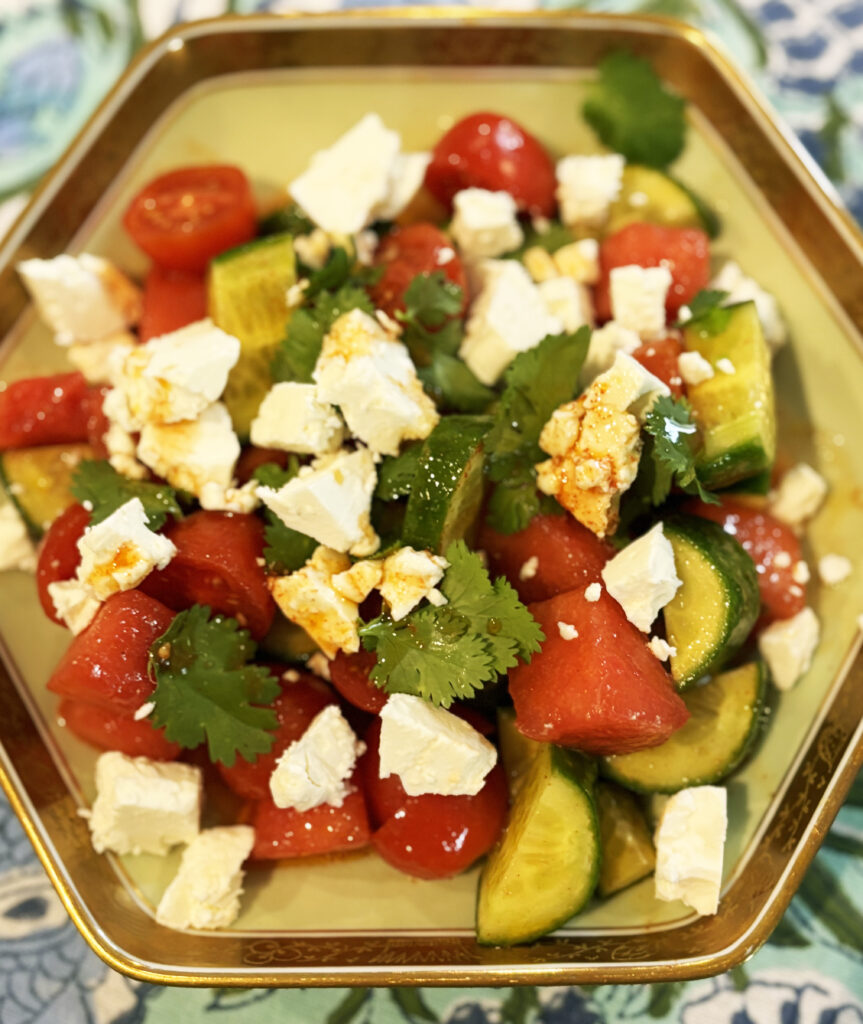
    Another salad combined watermelon, cherry tomatoes, cucumbers and feta in a smoky lime vinaigrette. The smoky lime vinaigrette was utterly fabulous and I would make it again and again to serve on a variety of salads. The salad itself was very good but it was just a salad, a salad with a fabulous dressing. I wish I had used English cucumbers, as recommended, rather than the Persian cucumbers that were in residence in my crisper drawer, as Persian cucumbers tend to be drier than the larger English variety. But it was still a good salad.

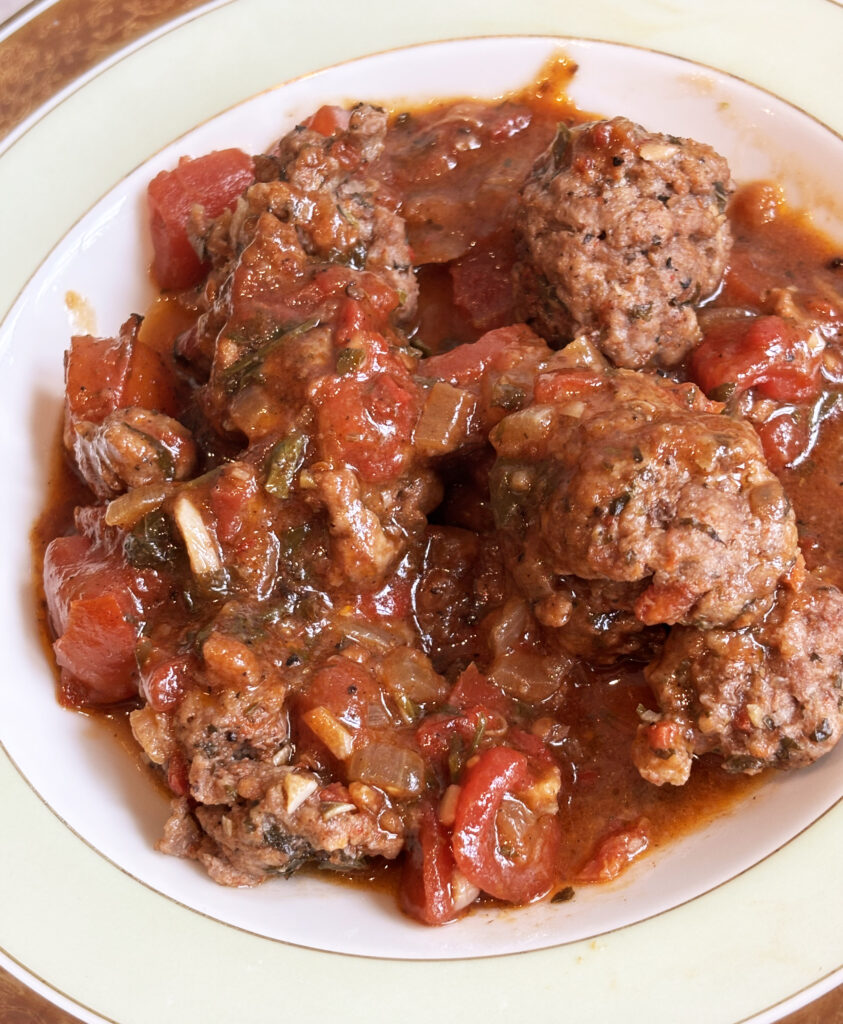
    Next I made the “Tender Lamb Meatballs in Tomato Sauce with Fragrant Spices”. The meatballs were indeed quite tender, almost delicate, which was a nice to balance to their delicious lamb-forward flavor. The tomato sauce was also particularly good and, luckily for me, the solo diner, the dish improved overnight. The first day the dish was delicious. but I felt there was a bit of gentle sibling going on between the meatballs and their sauce. The dish was very good but nothing special.. The second day the flavors had melded marvelously into something compelling. My only other note is that though Holmberg mentions serving this with rice or other starches, I felt the rice felt wimpy with the meatballs, and I have enjoyed them much more with pasta, polenta or grits. (the latter a suggestion from someone in the cookbook club).

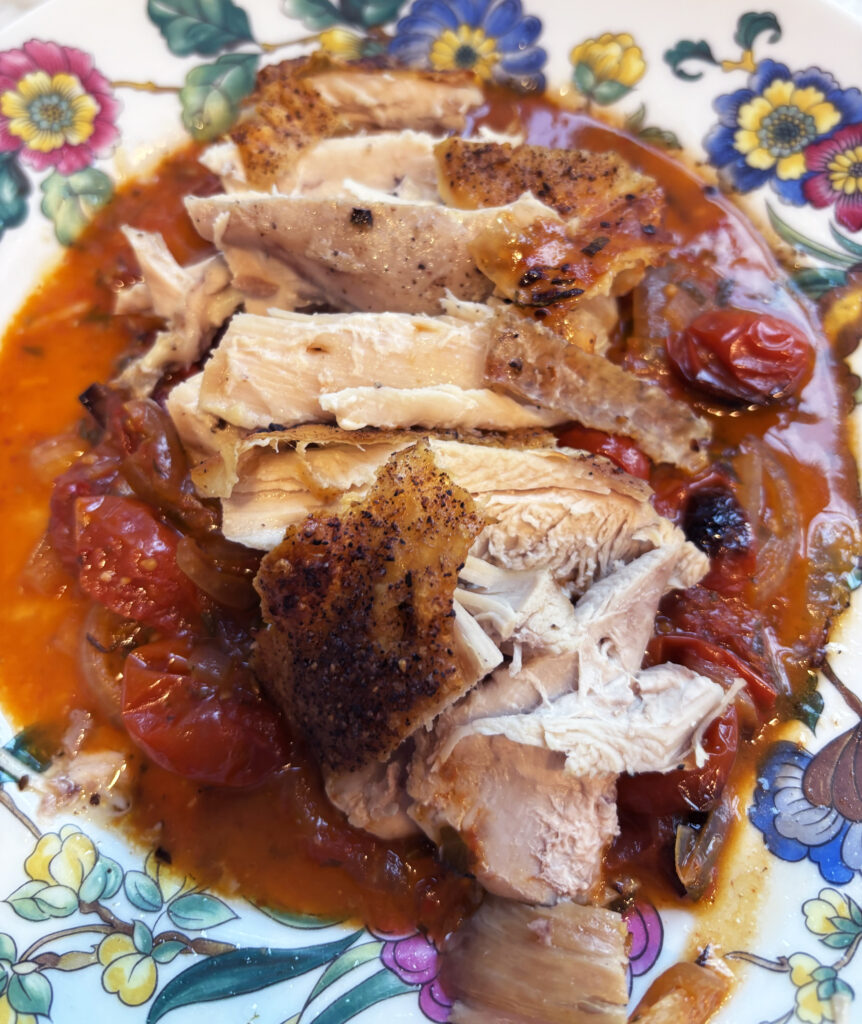
    The final dish I made from the book was “Sheet Pan Chicken Thighs with Tomato Onion Compote”. This was utterly delicious and dead simple, a great dish to throw in the oven when one is just too tired to do anything more than just sit down and hope dinner materializes on its own. My chicken thighs were huge. over a pound per thigh, and they still ended up being tender and delicious.

    This book has proven to be a great addition to my library and I am looking forward to trying more recipes. And this is, in the end, one of the great benefits of cookbook clubs. Club choices offer an opportunity to discover new ideas and new sources of inspiration that I would never have found on my own.

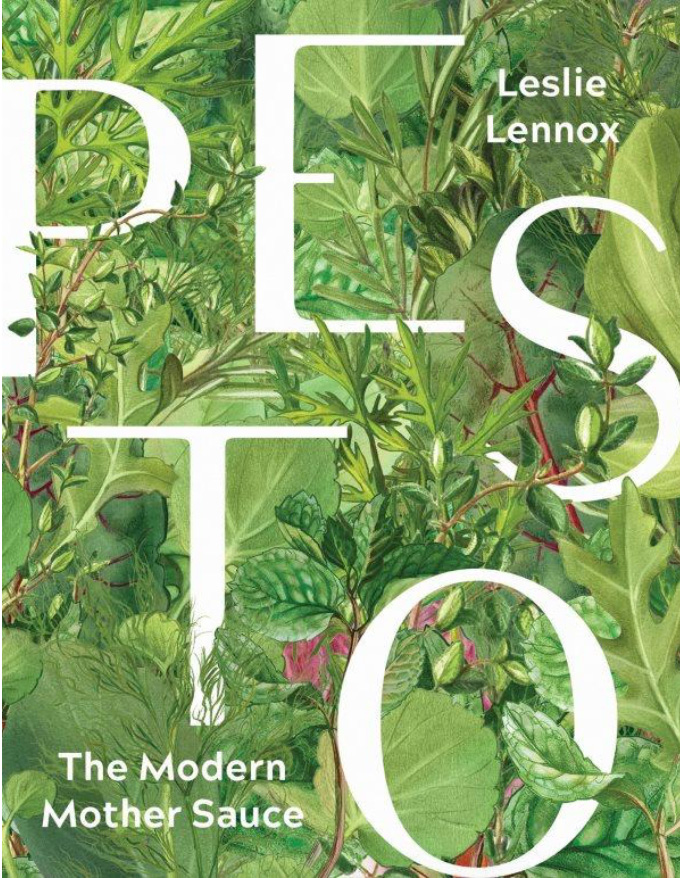
    The second September book was Pesto by Leslie Lennox. The book is beautifully thought out and researched. It is filled with good ideas, but I remain. undecided as to whether or not it will take up permanent residence on my shelves. The book is an exploration of pesto, beyond basil, and it is filled with great ideas for creating different kinds of pestos using various herbs and vegetables. Despite the charts, and the various pesto recipes, there is little here that I find new, and I haven’t found the suggestions to be improvements on things I already make.

    It is a great book for a newer cook, or a cook who hasn’t really used pesto beyond the classic Italian basil pesto and is interested in trying new variations on a pesto theme. I enjoyed reading the book and playing around with Lennox’s ideas, but aside from one recipe, which really is really an idea more than a recipe, there is nothing here that is expanding or changing what I already do in the kitchen.

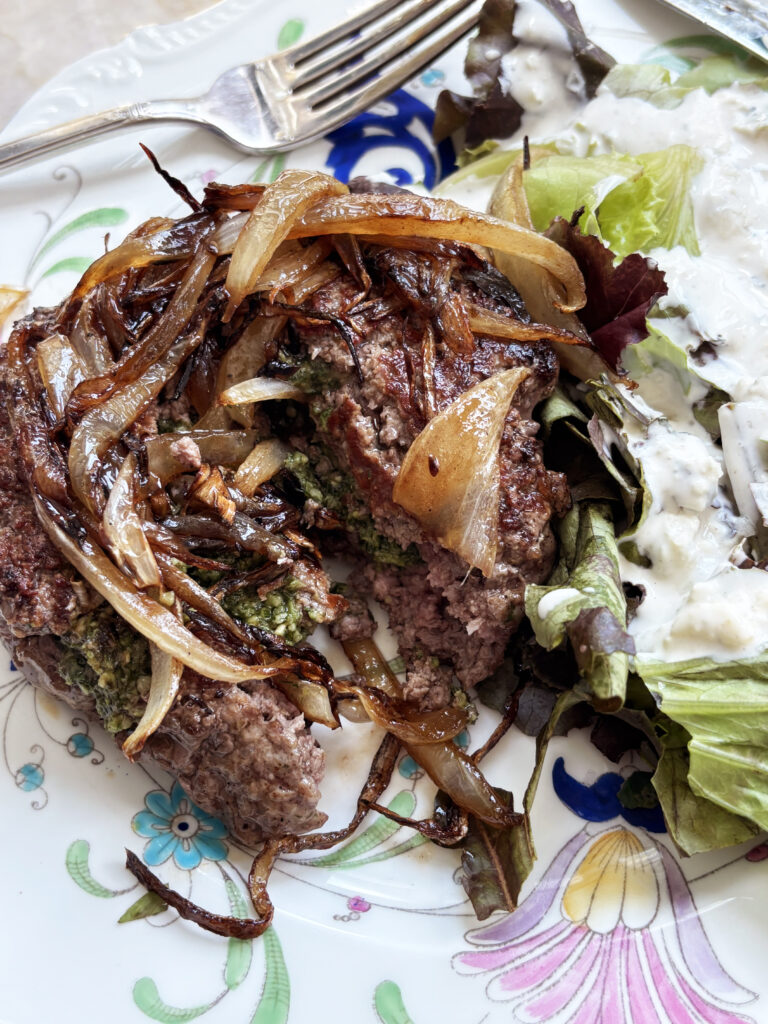
    The one thing I did make, and more than once at that, was the pesto stuffed burger, It is as simple as it sounds, a hamburger formed around a nice dollop of pesto. For the version used in the photo above I used fennel fond pesto, and topped the burger with sautéed onions. Pesto-stuffed burgers are a new favorite in my house, but I don’t really need a recipe.

    I still have a few ideas flagged in this book, so I haven’t relinquished it yet, but my inclination is that although it was fun, it is not a book I will use. .

  • You can never have too many pins

    I am attending a Masters Workshop with Emily Magli where I am making this dress:

    Both photos are taken from Emily Magli’s website. (here)

    The dress is made of four “squares” hung on the bias. It is both very simple and completely intriguing..

    The first day I made a muslin and cut my fabric. I am making the dress out of a fine green cotton voile. I took my time squaring-up the fabric, laying out the muslin pattern and cutting. By the time that was all finished, the day wasn’t over but I was done.

    As you can see from the picture below. the squares aren’t really squares, although I couldn’t really get enough distance to photograph the entire pattern piece.

    I also spent a good deal of time pinning both the front and the back pieces to their respective pattern muslin, using tons of pins to make sure nothing shifted around. Although I did cut the pieces double (two fronts, two backs) I could only cut one piece at a time, using shared cutting tables, so the pieces had to be moved before cutting another piece or marking. So I pinned. perhaps excessively so, as Emily commented that I didn’t really need to mark the hemlines. (All pieces have narrow-hemmed edges). I replied that I was simply anchoring the pieces together. You can see my rows of pins along the edges in the picture you below. I am also known for using generous quantities of tape when sealing packages.
    After all, one can never be too careful.

    The second day was spent marking those seam lines in the middle of each piece. I spent some of my down time obsessing over the whole thing. because the fabric is sheer, and I didn’t want anything showing in the final garment. I decided that I would use different colors of basting thread so that I could tell the pieces apart. Yellow was for side seams. Pink or Red for either center front or center back.
    Today was day three, or narrow hem day. I spent the morning making practice hems. the biggest issue was the corners and I made several versions before I was ready to take on the pieces of the actual dress. In the end I didn’t finish even one of the four dress pieces, but the day ended just as I was about to tackle the most complex edge, one containing a sharp angle. Waiting until I was fresh in the morning seemed to be the wisest choice. Nonetheless, I was very happy with what I had accomplished thus far.

    Liana and I ended the day with dinner and a cocktail.

    Liana had an amaretto sour and I had a specialty cocktail called the Nocturne #2, which consisted of Chopin Vodka, Peach Amaro, Bay Leaf Liquor, and Lemon Bitters.

    More later.

  • And Yet More Music

    Over the course of the last two weeks the Knoxville Symphony has held four concerts; I have attended all of them. The fifth concert is tonight, the opener for the pops series, and I will be there as well. It has been a very strong opening, and I have thoroughly enjoyed every concert, and, unusually for me, my niggling little critical voice, although not absent, has been relatively quiet. I thought I should catch you up on the two concerts I have not yet mentioned.

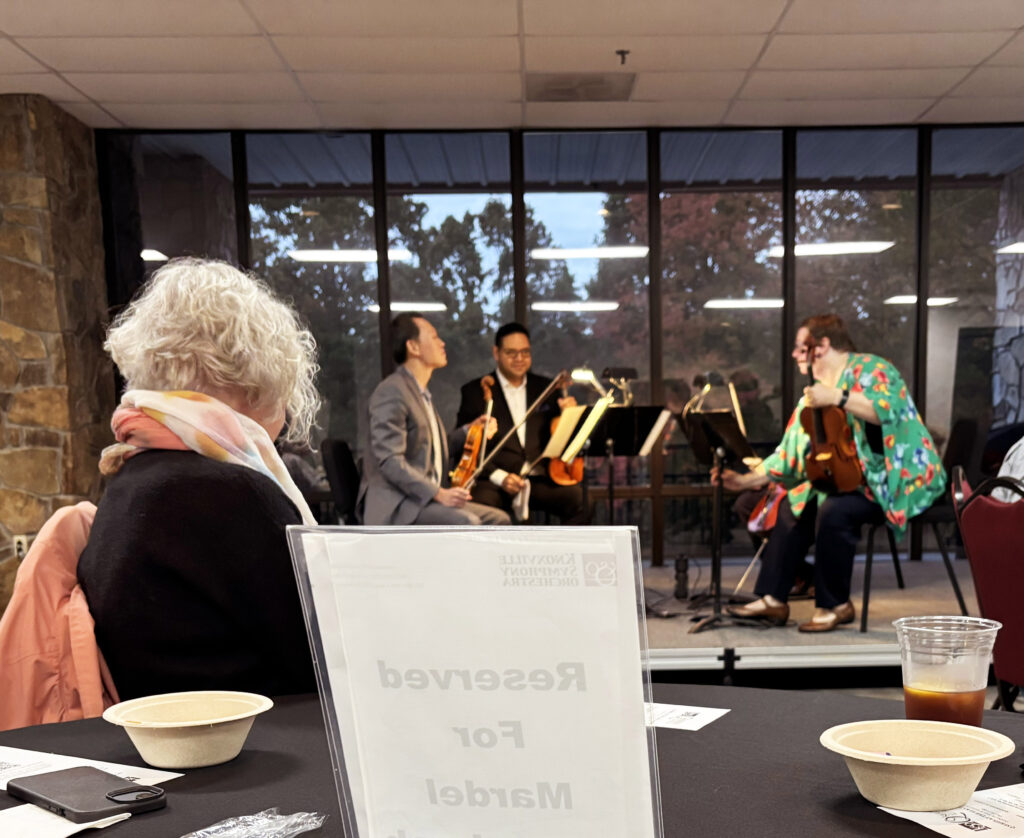
    I will begin with the most recent concert, the Concert Master Series at the Knoxville Museum of Art, which I attended on Wednesday night. The program was titled “Spanish Vices” and it was absolutely lovely, although really only the first half of the program was Spanish, in terms of either theme or composer.

    The first half of the program consisted of four works for violin and piano, four pieces that explored themes of sensuality and romance. The concert opened with John Williams arrangement of Tango for Una Cabeza from the film, Scent of a Woman. It was a great opener, lush and familiar and certainly set the mood for the music to follow.

    The next work, Pablo de Sarasate’s “Introduction and Tarantella” led the audience deeper into the realms of romance. The first part of the work, “Introduction” is just that, an introduction. It feels both lush and almost courtly, yet filled with promise. I imagine a first meeting in a beautiful garden, constrained perhaps by convention, by the gentle art of first impressions and introductions, but a meeting that is the beginning of a mad romance. This is, of course, followed up by the wildly passionate, and complex Tarantella, an intricate weaving of sensuality and no small measure of intrigue. As one of the hairs on Shaun’s bow came loose and was floating about in wild gyrations, he artfully plucked it from the air and flicked it away, as if brushing of an errant whisp from a spider’s web, only enhancing the sense of passion and pursuit.

    The Sarasate was followed by two additional pieces, Manuel de Falla’s Spanish Dance from “La Vida Breve”, and Chiquinha Gonzaga’s Corta Jaca, engaging the audience in a further exploration of the vagaries of love, seduction, and art.

    In the second half of the concert Devan Jaquez joined Shaub and Class for two trios: Bohuslav Martinu’s Sonata for Flute, Violin and Piano and Nino Rota’s Trio for Flute, Violin and Piano.

    I adored the Martinú, not surprisingly as I am a big fan of Martinu’s music, despite relatively rarely hearing it in performance. On Wednesday evening I felt that Shaun and Jaquez captured the precise balance I find in Martinú between lyricism and a precisely delineated underlying tensions. Martinu artfully balances distinct rhythmic passages with notes of jazz and dance or folk music in a way that is both infectiously joyful while yet at the same time acknowledging underlying rhythmic discordancies. During the first movement I was almost dancing out of my seat. The second movement, a pastoral Adagio in 3/4 time had me wishing to curl up with a blanket, simply washed with the music. That cheeky blend of lyricism with competing tensions of jazz and folk influences returned for the third movement. The fourth movement is more difficult. In one sense it seems to be a pastiche of several smaller movements, none with any real bearing on what has come before or after. There is a discordant piano solo, some lilting passages here and there, several virtuosic moments, and an apparent lack of obvious connection. George always thought this movement was an add on that could have been dispensed with completely, but it always reminds me of alternate possibilities, of the road not taken, and in that sense enhances the entire experience. Is there a correct answer? I doubt it.
    The final piece was by Nino Rota, and it was lovely. I probably did not pay enough attention. I find Rota enjoyable but not fully engaging and at the end of the concert, following the fabulous Martinu, I didn’t have the will to tune in with greater intellectual vigor. I felt the flute had a delightful role in the piece, nicely explored by Jaquez, but I also felt the piano was perhaps a bit too heavy. Regardless, it was a lovely evening.

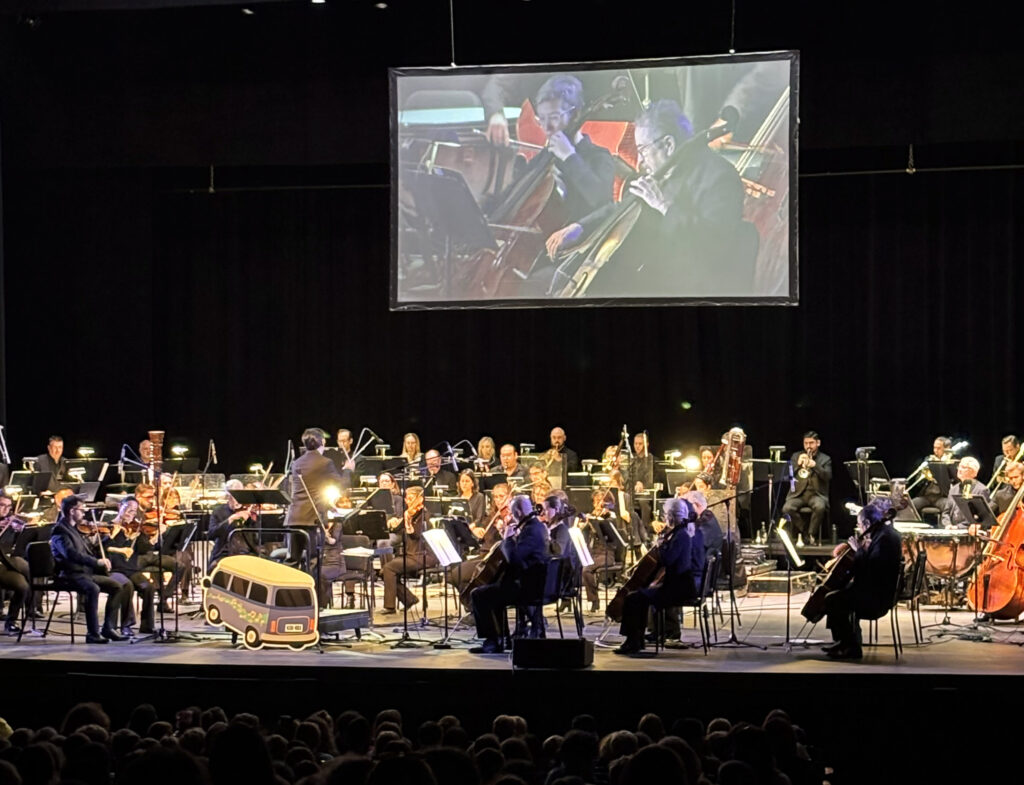
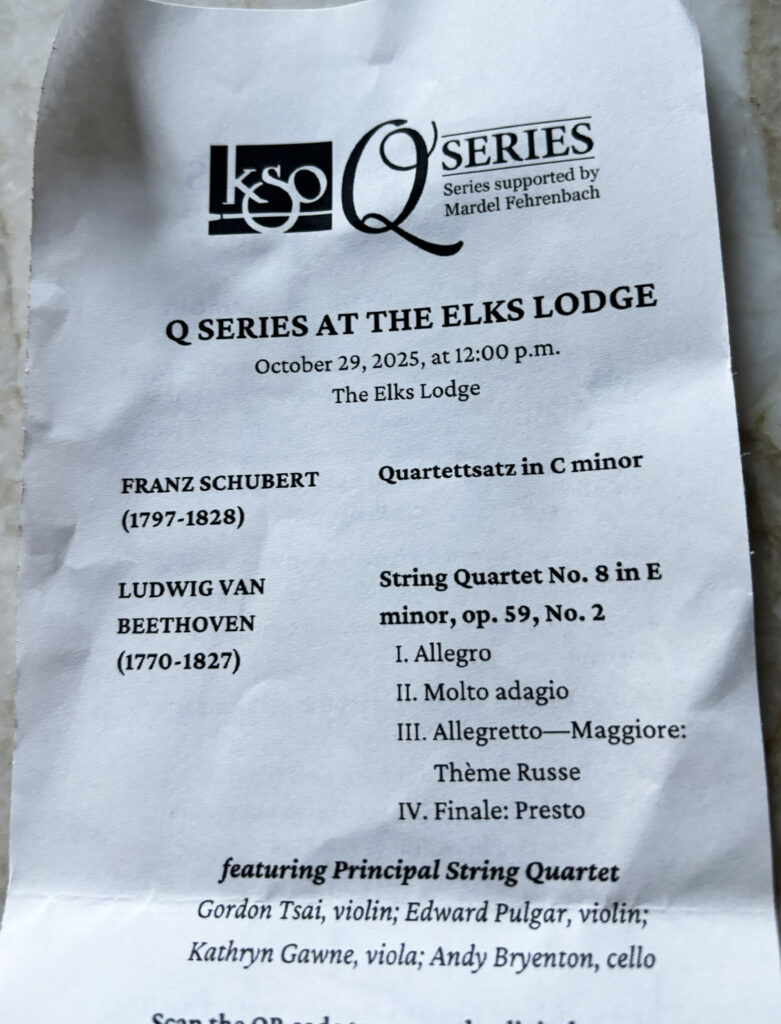
    Which brings me to concert number 3, the previous Wednesday. This was the noon performance by the Principal String Quartet and the Principal Woodwind Quintet. This was the unusual, for me, concert where I knew absolutely nothing about any of the works performed, nor for the most part, the composers. I had heard of Juan Crisóstomo Arriaga, although I could not put my finger on any works that I may have hard. We heard the first string quartet. The other two composers, Eurico Carrapatoso, and Karl Pilss, were completely unfamiliar. I thoroughly enjoyed all of the music and think I will need to make an effort and further listening. This is one of the things I love about this series, the musicians pick music they love and/or want to play, and the joy of each performance is contagious.

    All in all this has been a spectacular kick-off to the Knoxville Symphony’s 90th season. I am sure I wlll love tonight’s concert, “Soft Rock of the 70s and 80s” but I probably won’t write about it further. I am looking forward to what promises to be an exciting year.

  • Dancing with Strauss

    The season opener for Knoxville Symphony’s Chamber Orchestra series, a program titled Mozart & More, was Sunday, and it continued what has so far been a fabulous start to this, the Knoxville Symphony’s 90th season. It has been a long time since I’ve written about music, but I am going to give it a go.

    For this listener the Mozart was not the draw here, although it was fabulous (more on that later), but rather the Horn Concerto No 1. in E-flat major, Opus 11 by Richard Strauss. I love this Horn Concerto, written by a young Strauss, and I was looking forward to this concert with a mixture of glee and trepidation. Glee, because when well performed this work makes me want to leap up and dance, and well, when not so well performed, it can become almost stolid. Principal Horn Jeffrey Whaley pulled off the performance brilliantly however and the interaction between soloist and orchestra was just entrancing. I was dancing in my seat, barely containing myself to stay calmly within its confines. Not only did Whaley display his mastery of the technical side of the music but he also showed that he is a master of playing the horn with warmth of feeling. I have not always heard this horn concerto played with such a combination of emotional resonance and technical harmony. It was indeed the highlight of the afternoon, and a performance that still echoes through my thoughts days later.

    The Mozart, Symphony #40 in G Minor, was also fabulous and surprised me with the depth and beauty of the performance. I’ve written before about how it took me years to look beyond the surface of Mozart, the familiar melodies we all know, and explore the depths, and I always find there is a particular tension in this symphony, a tension that Demirjian and the orchestra gently teased out well while still maintaining a balance that only hinted at the depths lurking beneath the surface brightness. I was also amazed at the sense of intimacy the conductor and the musicians managed in the second movement, taking the music in and making this listener feel like she was in the midst of a very personal moment, walking a fine line between searching for some elusive element while still holding on to that thread of joy. Another fabulous performance.

    The only downside of the concert for me was the first piece, Florence Price’s Octet for Brass and Piano, scored for scored for piano, two trumpets, two horns, two trombones, and tuba. The work was pleasing and a little mischievous, displaying an experimental nature I don’t remember noting in Price’s symphonic works. The piano particularly seemed to have a lilting playfulness that was, unfortunately overwhelmed by the brass. The brass portion was, intentionally I assume, more compact, and I assumed the piano was to dance around them. But at times the brass overwhelmed the piano, and felt a bit slow. I felt the music wanted to dance but was being leashed. The piece was lovely but I felt it could have been more. I would like the opportunity to hear the work again, and perhaps refine my opinion.

  • Standing

    A friend took this photo of me at a party Thursday evening.

    It has thrilled me to no end because I am standing straight. This feels like some kind of combination of a miracle and a profound achievement.
    Six months ago. I was not standing straight. I probably hadn’t been standing straight for a long time, but by that point, late April and early May, it had reached a point where even I could not ignore my own disability. I could not stand for more than 5 minutes, often no more than 2 or 3 minutes. I often had trouble walking. I knew I leaned forward, but I could no longer force myself to stand straight.
    I went to PT, beginning in early May, and I have been going ever since. It has been an ongoing challenge, and probably will be for some time. I learned that my right leg and hip muscles were so tight that I effectively had what I think of as a peg-leg dragging me around, doing it what it had to do. MY left side was very weak, as it had been hauled around, captive, for some time. All this developed over years, secondary to my completely fused back (T1 to L3-4 with a steel rod, L4-5 and L5-6 self fused). The body does what it has to do, until it needs help. And I can be a master of self-deception.

    As we loosened tight muscles and started to strengthen weak ones, my body felt like a battle ground, a mini-revolution in my own muscle, the stiff muscles did not want to relinquish control, the weak ones clamored to be heard. Sometimes I tilted less forward, sometimes I tilted left, or right, or some odd combination of the two. I began to realize that I was not as “normal” as I always assumed I was, and I was engaged not only in that physical battle on a muscular level, but in my own cognitive and emotional battle beset by ever-new reminders of how I did not move or appear to move in normal ways. The tree that has been buffeted and twisted by winds does not know that it is not straight like the other trees, it only perseveres, convinced of its own survival. In my heart I had always been a straight tree, and here I was learning I was anything but.

    Today, I still have a long way to go. My muscles are still tight. I am still learning to walk normally. But the photo above serves as a reminder, a talisman almost, of my progress. At Aunt Lillian’s funeral I stood for over an hour talking to people. At the above party I had already stood for well over an hour, when that photo was taken, and I was still straight. I stood another hour before I had to sit down. Slowly, I am walking more easily. Slowly, I can do more. Slowly I have less pain. I had always assumed that pain was a constant fact of life. Now it appears I can question that belief.

    Today, I am filled with hope. I CAN do this.