I belong to two cookbook clubs. They have been fun and helpful because I like to cook and I like to explore new tastes and techniques, but I live alone and often just fall into boring routine. By committing to cook something from a new book I feed a lifelong passion and encourage myself to have fun. I end up eating better as well.
In September, the Kitchen Arts and Letters cookbook club was cooking from two books.
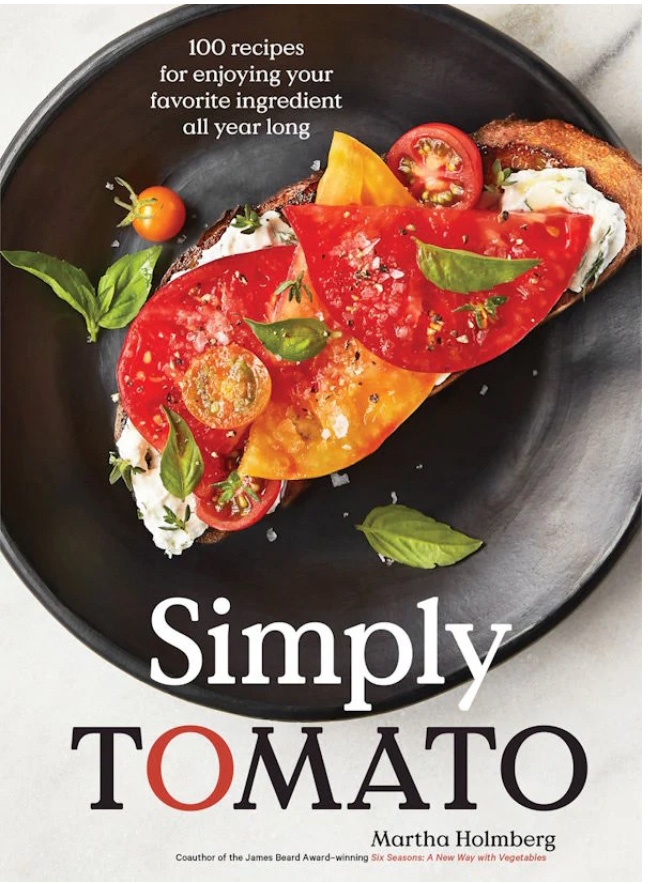
The first, Simply Tomato, by Martha Holmberg ended the month strong although I was initially a bit wishy-washy about it. Holmberg is a cookbook writer and recipe developer who has worked with Joshua McFadden on his books, and I was familiar with those books. My own mixed feelings arose simply because, on my first perusal, the book looked like it was simply filled with variations on a lot of things I already make and eat. But I was determined to give the book a chance.
It is true that, for the most part, these are not earth-shatteringly new dishes. There is comfort in that. But Holmberg is also a talented recipe writer and the book is filled with small details about ingredients and technique that elevate each dish without adding loads of complexity to the execution. None of the recipes I tried are difficult. Everything I tried produced excellent results that had me thinking about familiar dishes in new ways.
So, the big Question, what did I make?
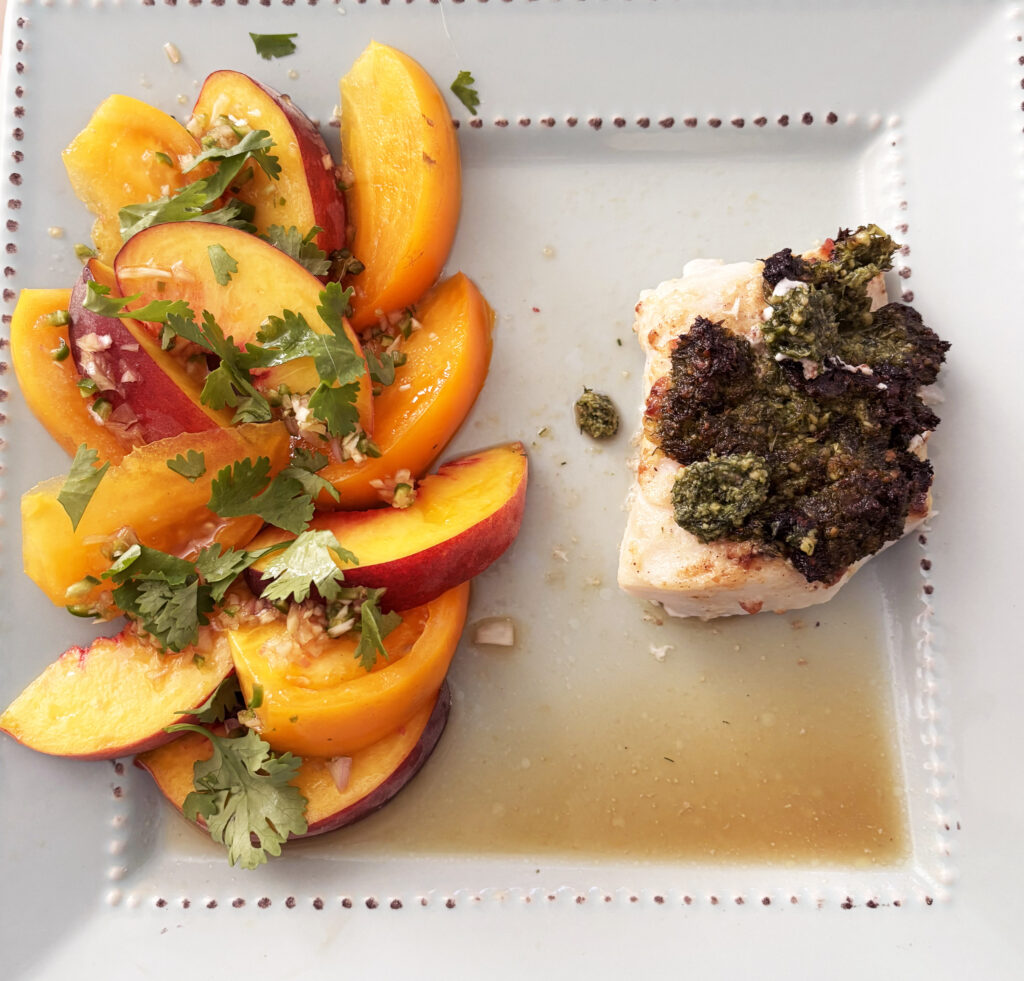
First up was a peach and tomato salad with a lime and ginger vinaigrette that was inspired by nuoc cham. . This was fabulous and my only complaint was that I used a yellow tomato which was good but not great. I have learned that although yellow tomatoes are good in a mixed salad, I generally prefer red tomatoes. That is just about my taste buds, and just as surely as I’ve said I don’t love yellow tomatoes, I’ll now find the perfect yellow tomato variety that I adore. Anyway peaches and tomatoes play very nicely together, and the vinaigrette adds a serious punch. I would not have imagined that fish sauce and peaches were such good partners.
I served the salad with a piece of cod that I baked with a topping of chopped up cooked broccoli, fennel pesto and mayonnaise. No recipe there, just the necessities of a fridge clean-out. It was delicious but not particularly photogenic.
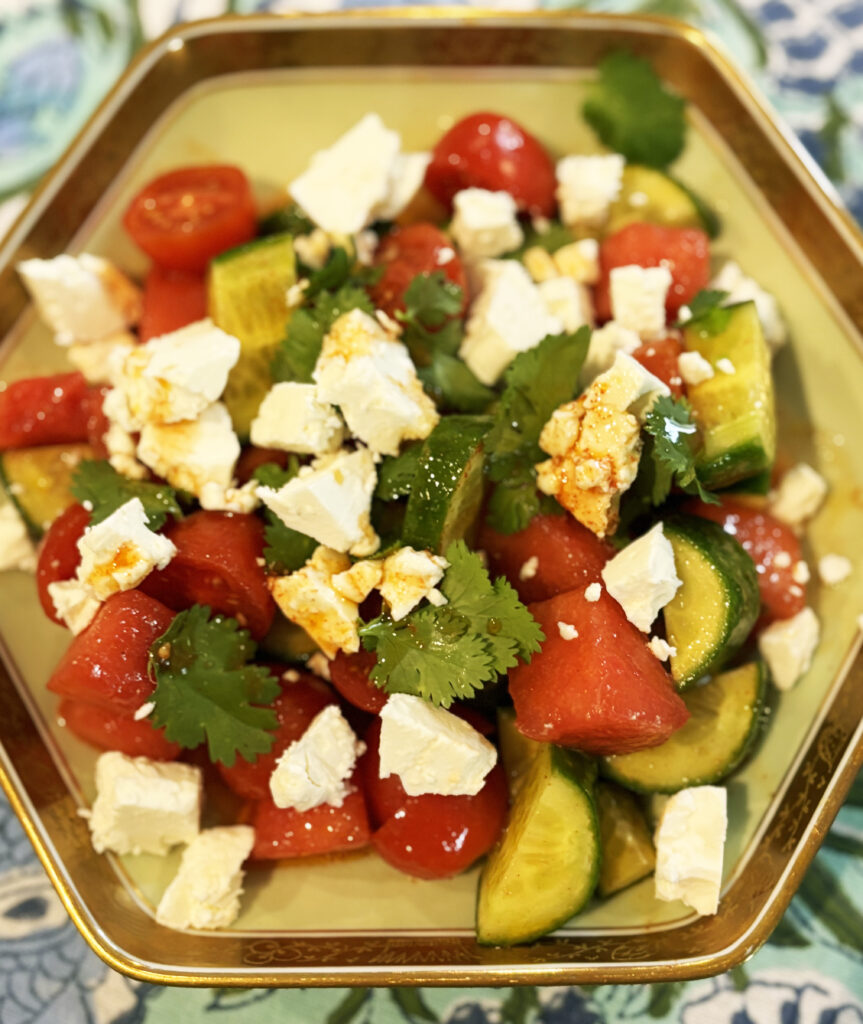
Another salad combined watermelon, cherry tomatoes, cucumbers and feta in a smoky lime vinaigrette. The smoky lime vinaigrette was utterly fabulous and I would make it again and again to serve on a variety of salads. The salad itself was very good but it was just a salad, a salad with a fabulous dressing. I wish I had used English cucumbers, as recommended, rather than the Persian cucumbers that were in residence in my crisper drawer, as Persian cucumbers tend to be drier than the larger English variety. But it was still a good salad.
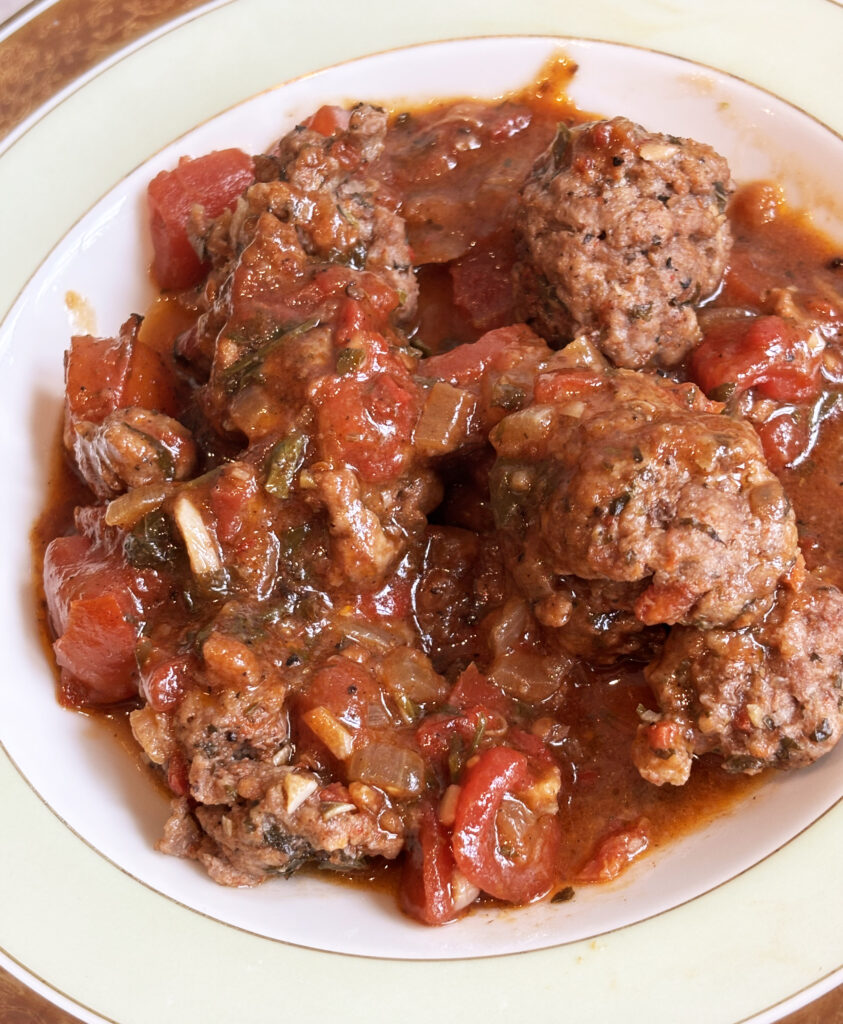
Next I made the “Tender Lamb Meatballs in Tomato Sauce with Fragrant Spices”. The meatballs were indeed quite tender, almost delicate, which was a nice to balance to their delicious lamb-forward flavor. The tomato sauce was also particularly good and, luckily for me, the solo diner, the dish improved overnight. The first day the dish was delicious. but I felt there was a bit of gentle sibling going on between the meatballs and their sauce. The dish was very good but nothing special.. The second day the flavors had melded marvelously into something compelling. My only other note is that though Holmberg mentions serving this with rice or other starches, I felt the rice felt wimpy with the meatballs, and I have enjoyed them much more with pasta, polenta or grits. (the latter a suggestion from someone in the cookbook club).
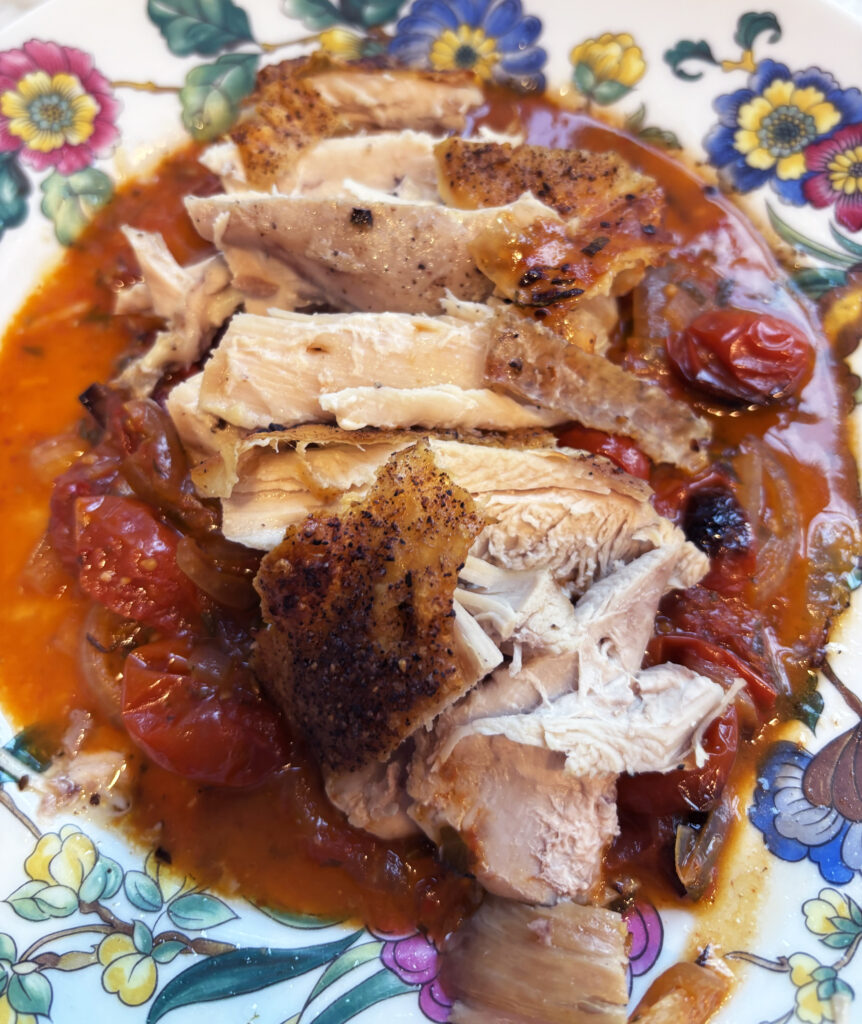
The final dish I made from the book was “Sheet Pan Chicken Thighs with Tomato Onion Compote”. This was utterly delicious and dead simple, a great dish to throw in the oven when one is just too tired to do anything more than just sit down and hope dinner materializes on its own. My chicken thighs were huge. over a pound per thigh, and they still ended up being tender and delicious.
This book has proven to be a great addition to my library and I am looking forward to trying more recipes. And this is, in the end, one of the great benefits of cookbook clubs. Club choices offer an opportunity to discover new ideas and new sources of inspiration that I would never have found on my own.
The second September book was Pesto by Leslie Lennox. The book is beautifully thought out and researched. It is filled with good ideas, but I remain. undecided as to whether or not it will take up permanent residence on my shelves. The book is an exploration of pesto, beyond basil, and it is filled with great ideas for creating different kinds of pestos using various herbs and vegetables. Despite the charts, and the various pesto recipes, there is little here that I find new, and I haven’t found the suggestions to be improvements on things I already make.
It is a great book for a newer cook, or a cook who hasn’t really used pesto beyond the classic Italian basil pesto and is interested in trying new variations on a pesto theme. I enjoyed reading the book and playing around with Lennox’s ideas, but aside from one recipe, which really is really an idea more than a recipe, there is nothing here that is expanding or changing what I already do in the kitchen.
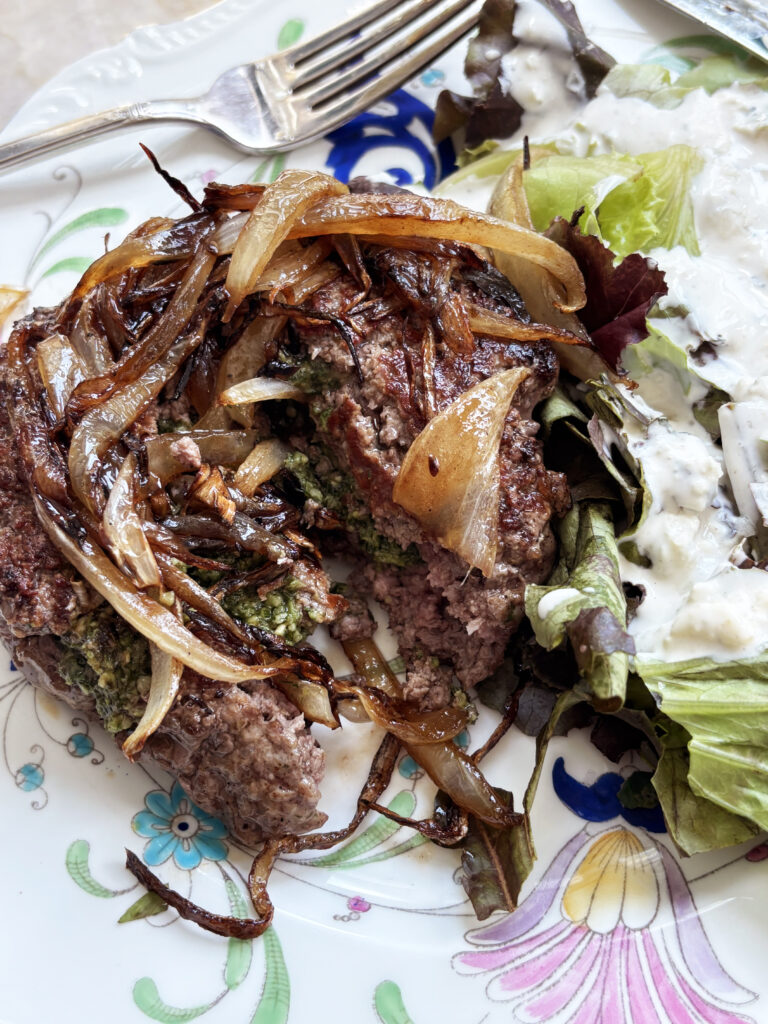
The one thing I did make, and more than once at that, was the pesto stuffed burger, It is as simple as it sounds, a hamburger formed around a nice dollop of pesto. For the version used in the photo above I used fennel fond pesto, and topped the burger with sautéed onions. Pesto-stuffed burgers are a new favorite in my house, but I don’t really need a recipe.
I still have a few ideas flagged in this book, so I haven’t relinquished it yet, but my inclination is that although it was fun, it is not a book I will use. .