I left a book off my February list. I’ve also changed my format slightly. The process is evolving. Now I will write about the books in the order read, beginning with the missed February book, then skipping to March. I am not aiming for reviews, and as I somehow failed to take notes on my reading in March, expect only brief impressions.
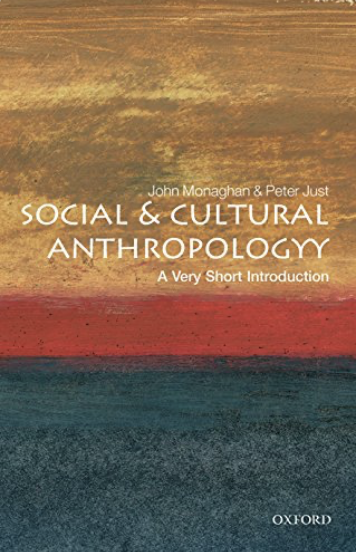
11. Social & Cultural Anthropology: A Very Short Introduction, by John Monaghan & Peter Just.
This was a short, clear introduction to ethnography as practiced by anthropologists. I’ve read some primary source material in anthropology, and last year I read a college intro survey to anthropology which I thought was pretty insipid and dealt more with trying to win students into the field rather than teaching anything. Harsh, I know, and possibly wrong-headed. This book was different. The cultural examples were fascinating, but the book also delved into the controversies and difficulties with studying and understanding other cultures, the problems of implicit bias, and the dangers of passing off assumptions as science. This was worthwhile.
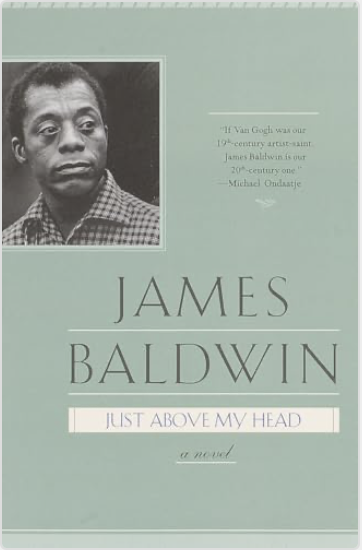
14. Just Above My Head by James Baldwin.
I loved reading this novel, loved the story, loved the language and the pure literary pleasure of it. Baldwin writes with poignancy, clarity, and depth of joy and horror, of loss, of love, of the range of human existence, and he does it with language that is precise and caring. Reading this novel clarified my thinking about all the flaws in These Pretty Pieces of Flesh, which I had read the previous month. But this is not about comparison. My reading of that first book felt hampered by rage and resignation. Baldwin addresses all the same emotions, all the violence, and all the love, but he does so with acceptance and love and without pushing you off the mountain. A book worth crying over.
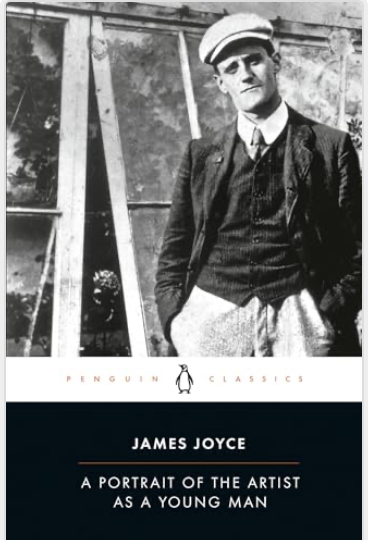
15. Portrait of the Artist as a Young Man by James Joyce.
Again I reveled in literature, in beautiful prose, in nuance, and in writing that guides you gently without hitting you over the head with what you are “supposed” to feel. This novel is a wonderful exploration of of individuation, of that process that the young (teenage) mind hopefully goes through in the process of transitioning from childhood into adult consciousness. I adored reading it now, and found it insightful, thought-provoking, and yet completely compelling. More so with this read as compared to my first read when I was 18 or so; then this was a difficult novel. This time it was a joy; thought-provoking but still a joy.
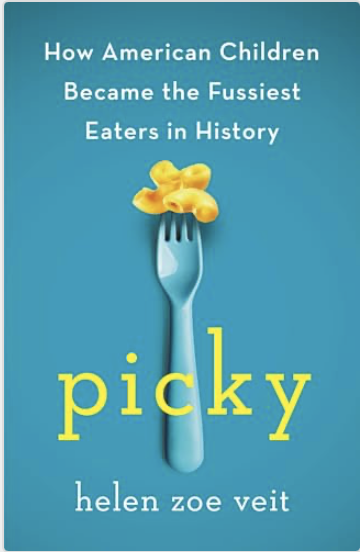
16. Picky by Helen Zoe Veit
Today it is assumed that children taste food differently than adults. But that has not always been the case. I read this book because it plays to my natural biases. It is a cultural history, written by a historian, and it is not going to help you teach your children to be less picky. Veit goes into exhaustive detail concerning the evolving understanding of food, nutrition, and what we eat. It is a fascinating book about how we evolved, over a very short period of time, from a culture where children ate everything to where we are today. At times too strident, I found the book nonetheless fascinating and a quick read.
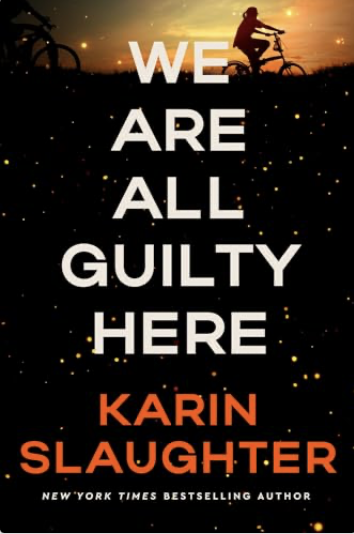
17. We Are All Guilty Here by Karin Slaughter
At last! Some popcorn fiction, otherwise known as quick, escapist reading, this time in the suspense genre. I’ve always enjoyed Slaughter’s novels and this one was no disappointment. Smart female protagonists, powerful storytelling, and yes, some really uncomfortable brushes with the evil that can infect humanity are all present here. This is the first volume in a new series. I am looking forward to more.
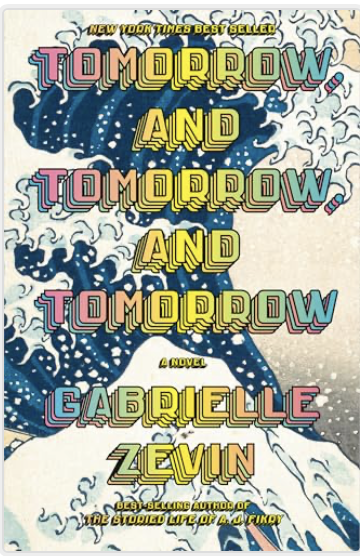
18. Tomorrow and Tomorrow and Tomorrow by Gabrielle Zevin.
Wow! I had doubts, partially because I am not a gamer, and really do not understand gaming culture. I also found aspects of the college portion of the novel disturbing. Sadie is smart, but her sexual experiences appear to be flat and one-dimensional in a leather stereotypically sexist way. But overall the book arises beyond that.
The book was fabulously well written, compelling and fun reading, and it held my interest throughout. It also made me think about gaming, and world-building, and the way they interleave with new understandings of literature in ways that I had not encountered or figured out before. The characters are extraordinarily cynical and nihilistic even though the book is not, and I found that interesting. I am also fascinated by the depth of the characters, and the way this book really empathetically explores the dynamics of a creative team that works together brilliantly, each sparking insights that enhance the output, but who cannot succeed in a separate close interpersonal relationship. The very thing that draws them together, also drives them apart.
If I were rating Tomorrow and Tomorrow and Tomorrow, I would put it below the Joyce and the Baldwin, but I am not fully convinced of my own rating, In one sense I would say this is an almost perfect novel. In another sense, I would say the language is too simple, it reminds me too much of YA fiction, with a healthy dose of elite-college educated snark and self consciousness thrown in. I wonder if I am looking at this novel the way Joyce’s contemporaries looked at Portrait of an Artist. This novel does something different than what I expected, and it has led me to think about literature, and movies, and gaming in new ways, to form new connections. I think time will tell.
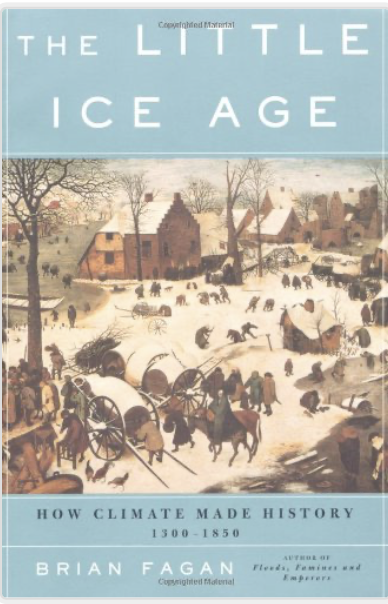
19. The Little Ice Age: How Climate Made History by Brian Fagan.
This book was a serious disappointment. I assumed I would like this book. The best thing I can say about it is that it is very readable. However it is seriously marred by the author’s inconsistencies and the way he cherry-picks data to fit his thesis, both using and misusing historical data, or hiding data by over-dramatazation of isolated events that blur the big picture. Of course this makes for a readable book. Fagan tells a great story, and there are some truths here, but although I can’t call this fiction, it blurs too many lines. I wish it were better. He is not wrong. But he is not right either.