February found me mostly re-reading old favorites and not-so-favorites.
I started with Harry Potter. I read the first four books, and found them engaging. This is, in many ways a surprising statement because I initially disliked the Harry Potter series, and have long felt like I might be the only person in America who thinks Harry Potter is overrated. Although I did enjoy reading the books, however, the second reading only confirmed my initial impressions..
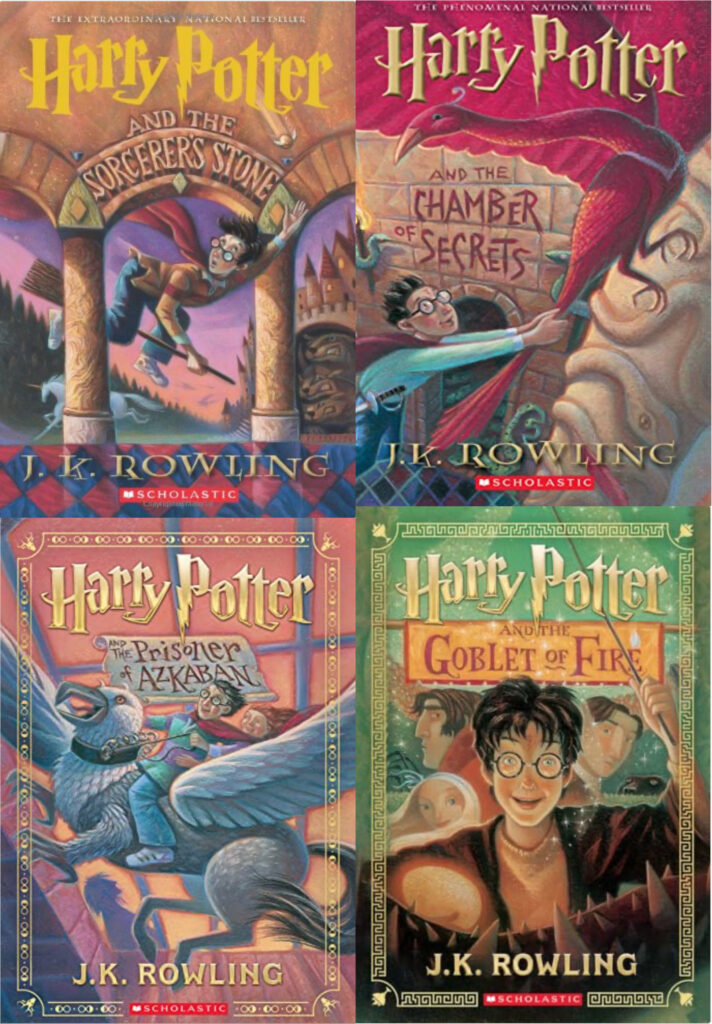
Why the reread?
It seems like the time was past due. Everyone I know loves HP. Even members of my book club, all highly intelligent, educated women, think the HP books are great and inform their children about so much. I cannot deny that Harry Potter has shaped a generation, and whatever my perceptions may be, it seemed that such an influential series was worth a revisit.
And yet, although I found the novels to be an engaging and easy read, my discomforts still outweigh the pleasures. This raises the question then, of what are my issues with Harry Potter?
Initially, when the first book came out I was simply disappointed with the terrible writing. Yes, Rowling has a gift for setting a scene, and a gift for the grand story line, but the writing itself, the actual writing, is appalling. Short, choppy sentences devoid of nuance, or color. Book one is written at about a 3rd grade lexile level. It seems like the kind of thing I might have thought was cool, when I was 8 or 9. The use of language is certainly what I might have used at that age. As an adult I find it embarrassing.
In the first book even the characters and the setting seem like caricatures, something that came out of the mind of a child rather than an adult. The characterizations do become more complex throughout the books, yes, but these are not books where characters are complex or nuanced in the way real humans are, meaning in all the grayscale that makes us human. Here, for the most part, everything is black and white.
That in and of itself may not be a problem. The early Harry Potter novels are mainly geared toward children. The simplistic writing does make it very accessible, and perhaps contributes to its success, at least in America, where, purportedly, 54% of adults read at or below a 6th grade level. Rowling is British though, and I had hoped the Brits were doing better. The writing does improve a grade level or two, but anything higher is more due to content than actual literary merit. Children aren’t stretched by reading this, and although I could get involved in the story, reading the book as a thinking adult feels more like a delve into infantile fantasy.
Which gets me to my other problems with the books. People tell me about how much HP exists in the realm of Tolkien, except that it does not. Rowling does, yes, reference Tolkien and many great myths and allegories that have shaped our Western Mind, but neither her world-building. (How I hate word as an aspect of literature, as if we can excuse bad writing because of good “world-building”. World building alone teaches us nothing, we do not grow, we merely escape into fantasy). Rowling’s world is not consistent, it is a bit of a mash-up of this and that.
The world of Harry Potter is, in many ways, a shallow world. Rowling has taken the British class system and turned it into a world of Wizards and Muggles. Once you see it, the comparison is hard to ignore, even to Americans. The Wizards are smart and creative and the top of the pecking order, and the muggles are ignorant and rather bland. Whether this is class, or race, or political leaning, this judgmental us-them relationship permeates every book, just as it permeates the world in which we live. I cannot blame that on the books, not completely, but the books fully exist in this world. The wizards think they are better than muggles just because they are wizards, but they are really no more open minded or accepting of differences than the muggles they despise. Most of the muggles are portrayed as brutish and crass, uneducated and uninformed. Do you see parallels here? Hogwarts is just a gussied-up British boarding school with all its attendant issues.
The problem is that the Harry Potter world is so familiar, that we take it for granted. Accepting this world is, in an insidious way, also accepting the cracks and faults of our own world. It is a very conservative world. Potter promotes tribalism (wizards vs muggles), classism and even slavery (house elves, muggles vs wizards, and even pure-blood vs mixed), and even anti-semitism.
I know I have ventured into a hot topic here. The Goblins in Harry Potter are portrayed using every literature trope that has been used for Jews in Europe and the Western world for over a thousand years. Yes, even Tolkien fell into that trap in The Hobbit, but he did amend his portrayal once it was pointed out, in the Lord of the Rings. Claiming that you are just following literary tradition is not an excuse, and even if it were, it is pretty lazy one at that. We no longer read “Little Black Sambo”, but we don’t see our own blind spots when we read Harry Potter. To tell ourselves otherwise is simply self-justification.
I suppose my problem with Harry Potter is that it seems fun and entertaining, and even morally uplifting, except that it is not. It is misleading. It is a grand story, and I think Rowling has enough talent that she could have made something more of it. But both Harry Potter himself, and Voldemort, are outside of this world even though the entire story revolves around them. The story has the “right” ending in that the bad is defeated and the good survives. Except that nothing changes in this world. And only Harry can defeat Voldemort, because Harry, for all that he seems like the average guy, also exists on the fringes of this world, partly due to the accident that killed his parents, as well as the way he was reared by his aunt and uncle. The story tells us of how exceptional people change the world, for good or evil, not normal people. The status quo, a world of selfish division continues on unchanged. It relegates the battle for good and evil to the grand exceptions, not to the everyday realities of life. Once Voldemort is vanquished, life goes on, unaffected and unchanged. Reading Harry Potter, I fear, does not lead anyone to want to change the world, but rather to settle more comfortably into the world as it is, flaws and all.
If the Harry Potter series has shaped a world, and it has, I am worried. Not that there are not good role models and characters in the Harry Potter series because there are, and there is some moral depth, but there is far more moral conformism and acceptance of the status quo. I will probably finish rereading the series, but for now I need a break to soothe my soul.