I believe I mentioned two cookbook clubs, but I only wrote about one. Let us continue.
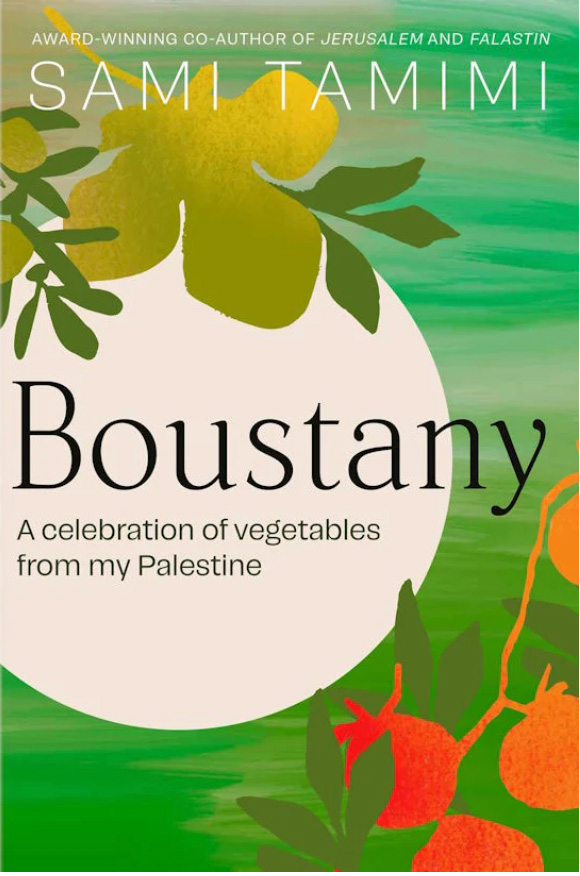
In September the book for the “Cookbooks of Interest” club was Boustany by Sami Tamimi. I own Tamimi’s two previous books, Jerusalem, written with Yotam Ottolenghi, and Falastin. Both are favorites and many recipes from these books make frequent appearances in my kitchen. I was, therefore, very excited about the release of this new book.
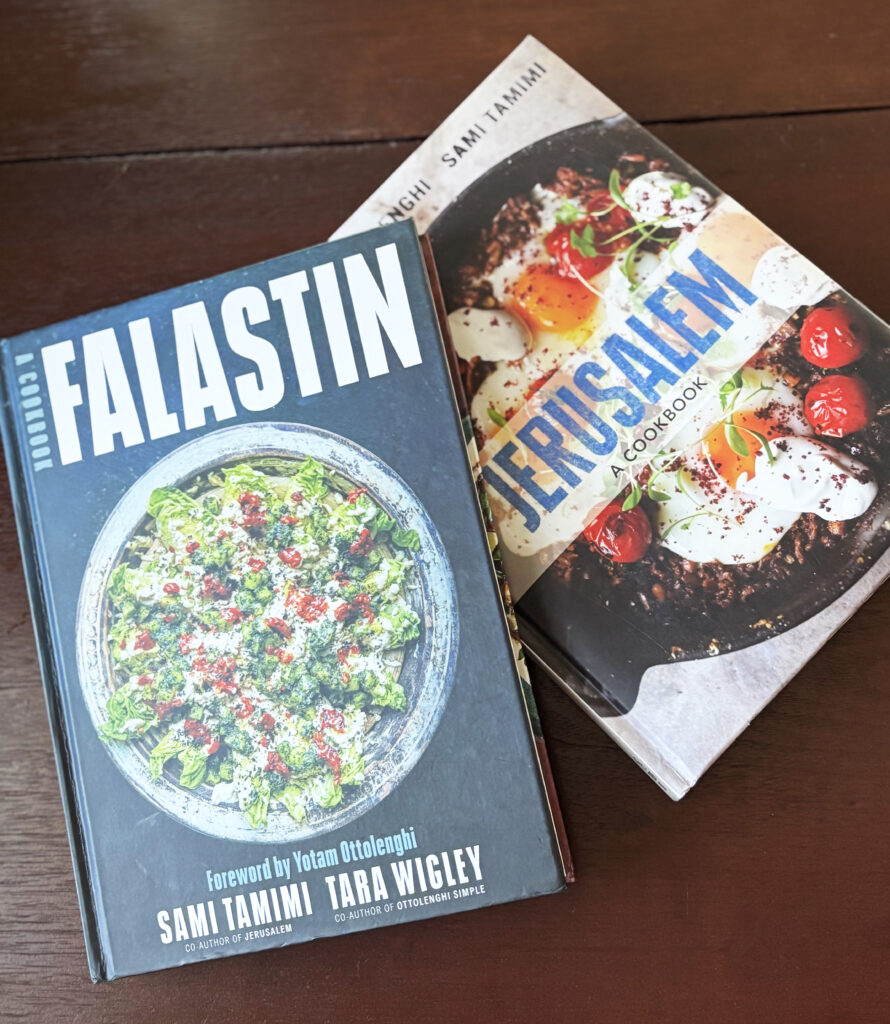
Yet upon my initial perusal, I found this book to be less appealing than the two previous books. Hence “mixed feelings” as the title of this post. Many of the recipes appear to be tweaks, or minor variations, on other recipes, meant to satisfy the vegetable forward focus of this book, but not necessarily compelling on their own. But that admittedly is my own perspective formed after a long life of cooking. Not every book can appeal to every cook.
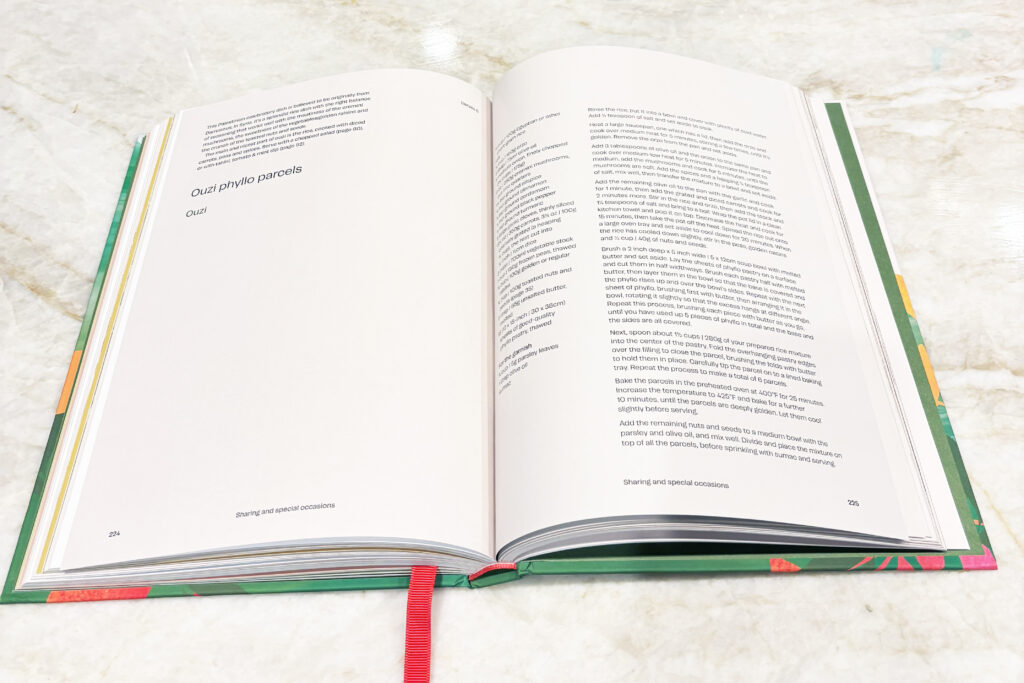
There is also a design issue I find annoying. Several of the recipes appear on the page in a format much like the one above. I understand that the goal is to have all the ingredients and instructions on one page. But apparently this means that for some recipes the title and head notes do not fit on the same page. Yet I find the layout above visually disturbing, distracting enough that it detracts from my enjoyment of the book. I admit that sounds shallow, and I don’t like the idea of being shallow. And yet here I am.
The recipes I have tested however have all been excellent. And that fact is softening my objections to the book.
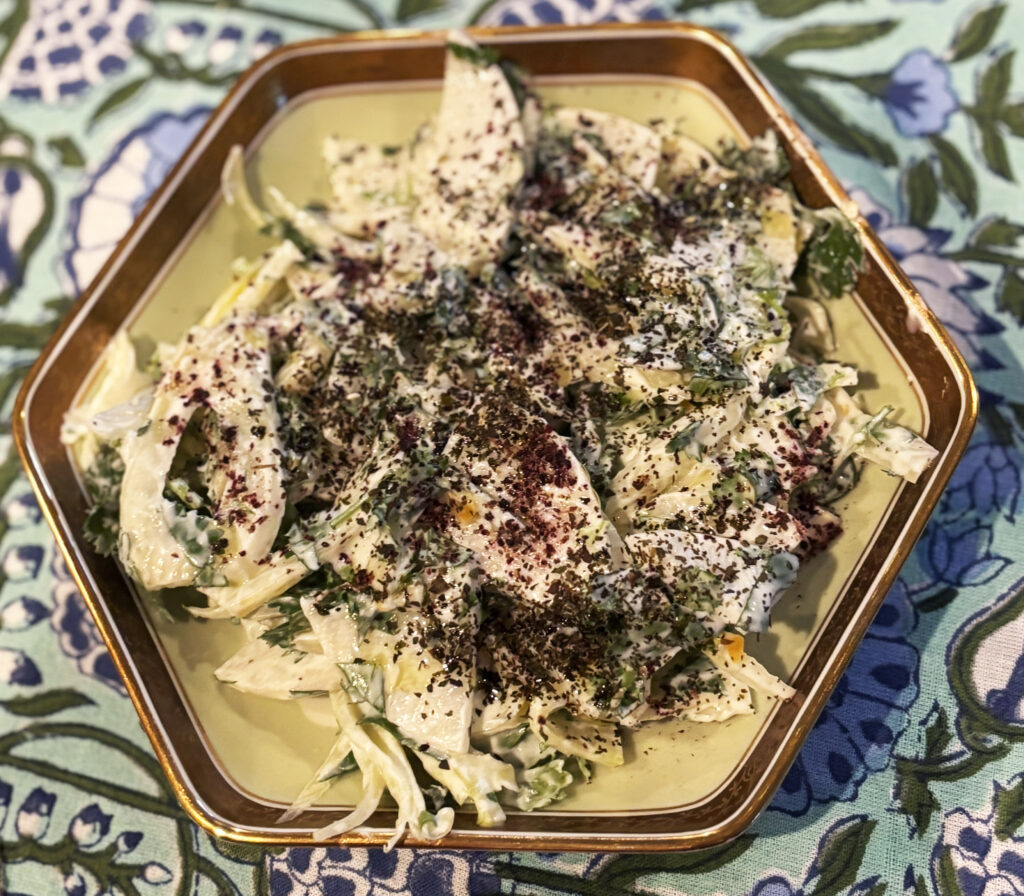
This was the Fennel, Kohlrabi, and Cilantro salad. I love the way the sweet, anise, crispness of the fennel plays with the soft juicy bite of the kohlrabi with its earthy, cabbage/turnip vibes.
I did not make the dressing exactly as written. Despite my conviction to the contrary, I did not have an orange, and I was too tired to go out just to get one, so there was no orange zest. I did have lemons and limes but although they would have been delicious, I was not convinced they would provide the note I wanted. Instead I used some candied grapefruit peel that I had made after infusing some gin with grapefruit last spring. I am sure the flavor profile was not the same as the one Tamimi intended, but it added a very nice note and provided that depth of citrus layering that I was seeking. That dressing, by the way, is fabulous and I would use it with many other dishes.
The salad and dressing played very nicely together with a subtle layering of flavor that I had not anticipated. Not surprisingly, using two types of mint, dried and fresh, added complexity. I did think my salad needed a bright pop of acidity so I sprinkled sumac on top, which was not in the recipe. This simply could have been my tastebuds, the use of candied grapefruit peel instead of fresh orange zest, or simply the differences in flavor between individual vegetables.
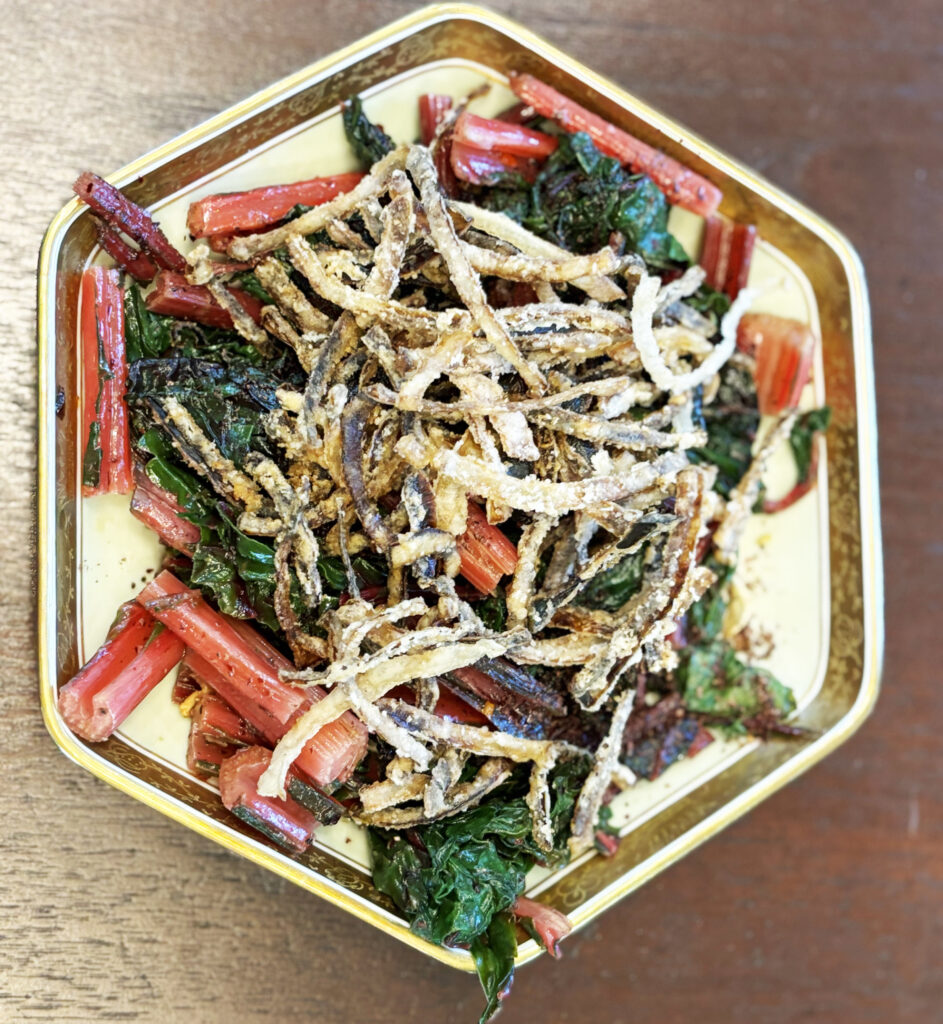
Next Up was braised chard with crispy onions and sumac. The idea of adding sumac to chard, one of my favorite vegetables, was very appealing. And I admittedly liked the idea of the crispy onions as well. Otherwise there is nothing new here in terms of technique. The chard is parboiled, drained, then sautéed the with aromatics; pretty much my standard method. Tamimi tells you how to make crisp fried onions, but frankly I think the kind that you buy at the grocery store would work just as well. If I could find gluten-free crispy fried onions, I would have not have fried my own. I learned that sumac and chard go very well together, and that crispy fried onions are good on top of sautéed greens. I don’t really need a recipe for this, but I never would have thought of it on my own. .
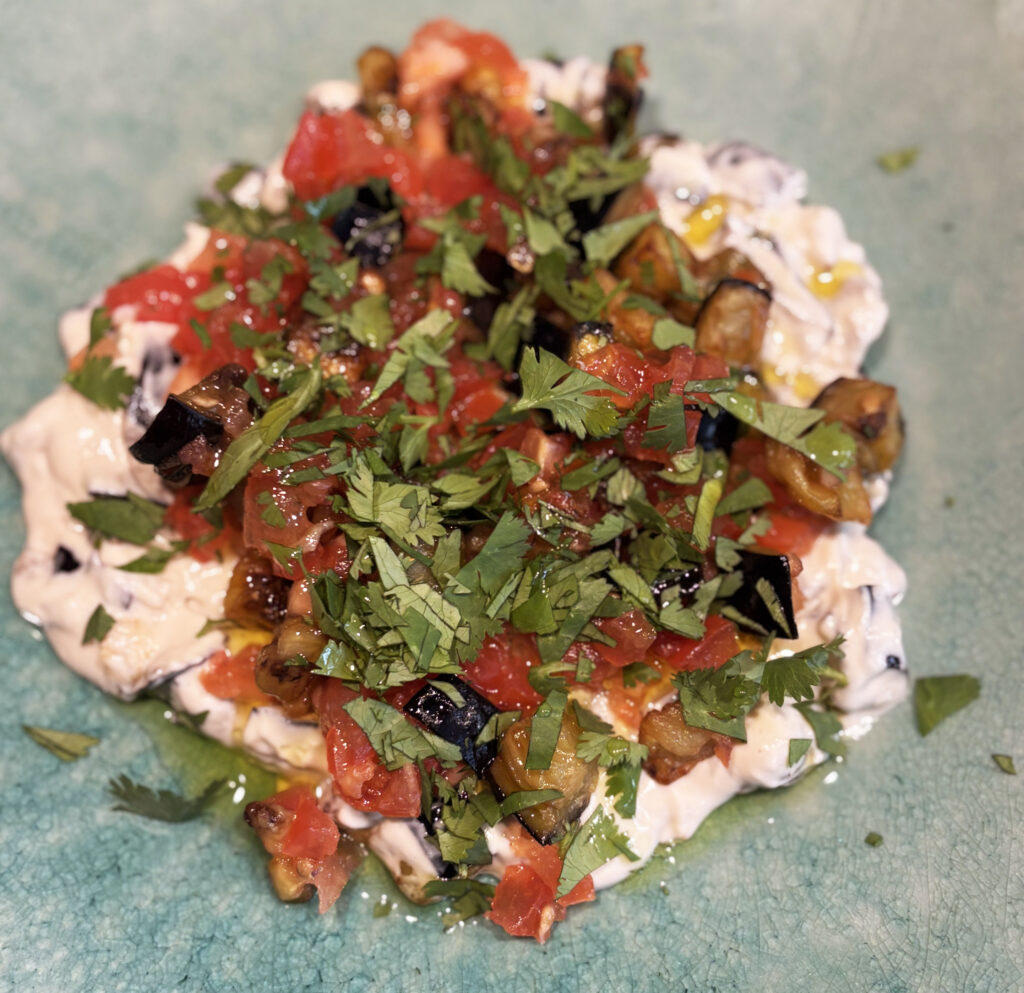
The high point of the book, so far, is the dish above: eggplant m’tabbal with tomato and cilantro salsa. This is a dish I would drive out of my way to have at a restaurant and I will definitely make it again. It is also a dish I will not make frequently just because of the time involved in salting the eggplant and then frying it. It is definitely worth the effort, but a bit indulgent for this solo diner. The salted eggplant does not absorb as much oil as it would if I skipped that step. Most of the eggplant is tossed with a tahini-yogurt sauce, and the remainder goes into the tomato cilantro salad. The result is far more than the sum of its parts. The dish is not difficult, it simply requires planning, and it is richly satisfying and crave-worthy. This dish alone was worth the price of the book.
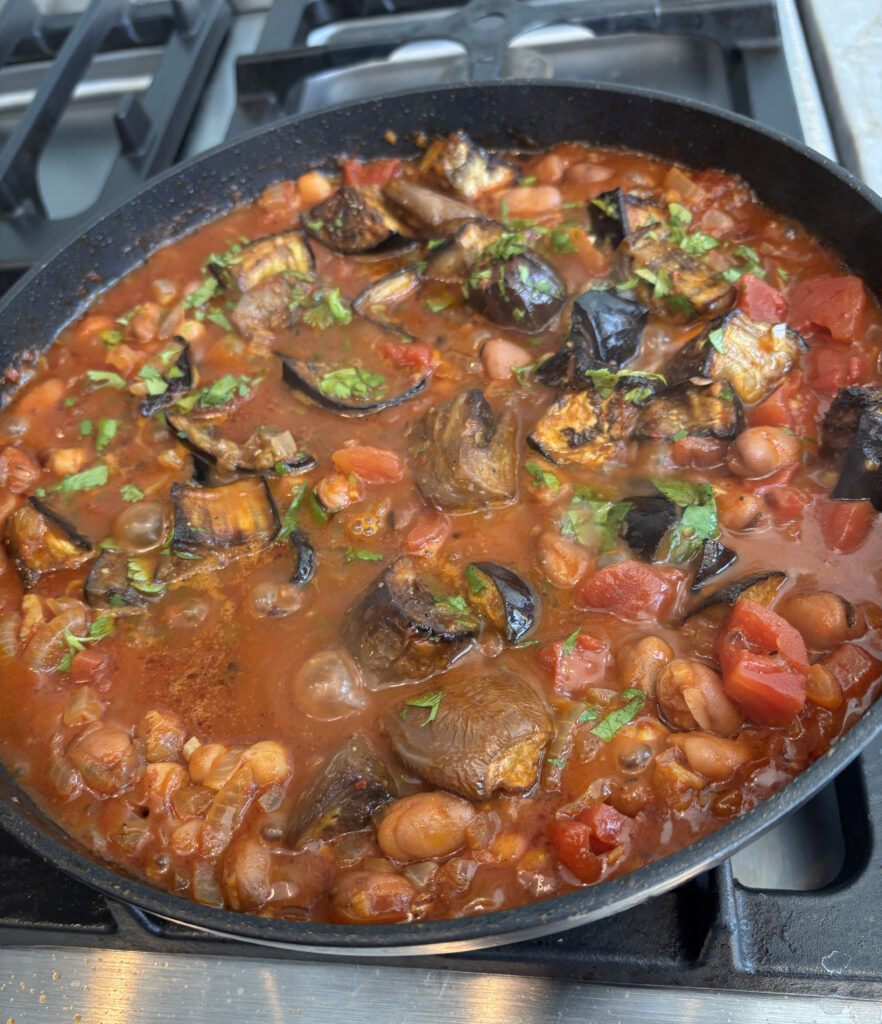
The final dish I made in September was Eggplant and Fava Beans with Eggs, although in the photo above you only see the fava bean and eggplant stew without the eggs. I made the full recipe, which served four, thinking that the eggplant, bean and tomato mixture would reheat well, and I could use it for multiple meals. This proved to be true, and the dish did indeed mellow and become softer and richer with age. I would keep additional stock available for reheating though as it does become dry.
I used canned fava beans. which is what the recipe called for. although I considered cooking a batch of fava beans from dried. In future I think I would prefer to start with dried, even though it adds extra work and time to the dish. I find the fava beans that are cooked from dried have a silkier texture than canned favas. And really it is not that much work to cook a pot of beans and use them for multiple dishes, or even freeze the extra to have on hand for last minute inspirations.
Overall, this dish was very good. I felt it needed a creamy touch, so I added a bit of sheep’s milk feta with my beans and eggs. It may not need the creaminess of the cheese with home-cooked favas, but then, cheese is always a nice touch.
Based on these dishes, the book was a success and one that has earned a place on my shelves, if only for the eggplant m’tabbal. There are many things I want to cook, and including quite a few new ideas and explorations. The recipes themselves are winning my favor over, despite those design glitches. I hate to admit it, but I may never make those recipes, the ones on the pages that annoy me, simply due to my own grumpiness. But thee is a lot more in this book to explore.